


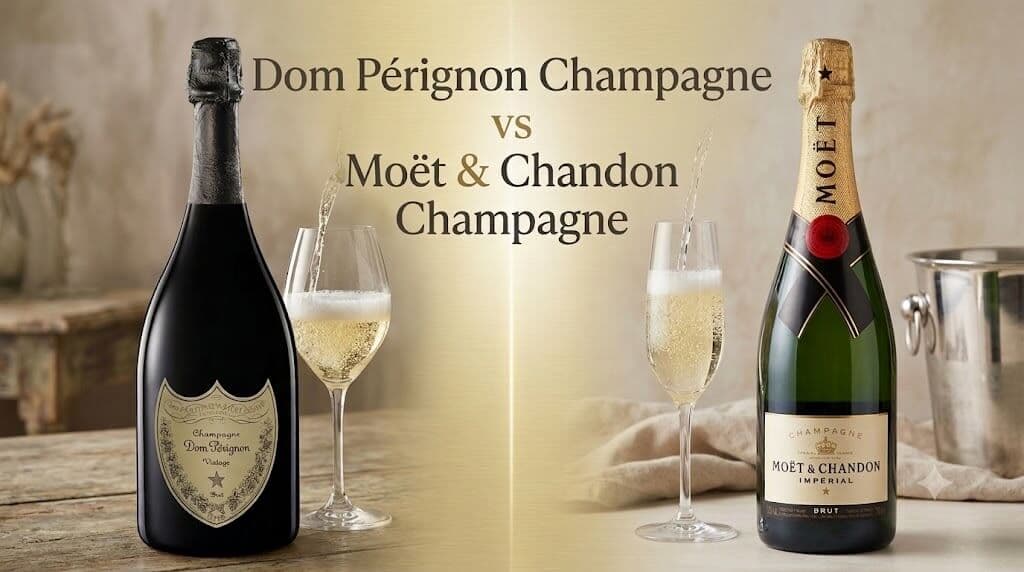
Walk into any wine shop, and you'll find two names sitting close together on the champagne shelf: Moët & Chandon and Dom Pérignon. They look like they belong together, and they do. Both sit under the LVMH umbrella, and Dom Pérignon began life as a Moët & Chandon cuvée.
But the bottles are very different. Moët Impérial is a non-vintage champagne built for pouring at parties. Dom Pérignon is a vintage-only prestige cuvée, aged for years longer, and priced several times higher.
If you're deciding which one to buy or gift, this guide walks through taste, aging, price, and which bottle fits which occasion.
Quick Comparison
| Moët & Chandon Impérial | Dom Pérignon Vintage | |
|---|---|---|
| Category | Non-vintage champagne | Vintage prestige cuvée |
| Grapes | Pinot Noir 30–40%, Pinot Meunier 30–40%, Chardonnay 20–30% | Chardonnay and Pinot Noir (balance varies by vintage) |
| Reserve wines | 20–30% of the blend | None (single harvest) |
| Aging | About two years | At least eight years |
| Vintage or not | Non-vintage (a blend of years) | Vintage only (single harvest year) |
| Taste | Fresh, fruity, crisp, easy to drink | Rich, layered, toasty, creamy |
| Best for | Parties, casual celebrations, big groups | Milestones, luxury gifts, collectors |
| Typical price | Roughly $50 to $60 | Roughly $200 to $300+ |
| Best gift occasion | Birthdays, housewarmings, holidays | Weddings, anniversaries, big promotions |
Sources: Moët blend and reserve wines from moet.com; Dom Pérignon aging from LVMH.
Are Dom Pérignon and Moët & Chandon the Same Company?
Pretty much, yes. Both brands belong to Moët Hennessy, the wine and spirits arm of LVMH. But the connection goes back further than any corporate structure.
The name Dom Pérignon comes from a Benedictine monk who worked as cellar master at the Abbey of Hautvillers in the Champagne region, in the late 1600s and early 1700s. Moët & Chandon later came to own vineyards connected to that abbey, and the house eventually named its prestige cuvée after the monk.
Today, Dom Pérignon stands as its own brand, but the family tree is clear. Think of it like a car maker with a mainstream line and a flagship. Same parent, different purpose.
What Is Moët & Chandon?
A Brief History
Claude Moët founded the house in 1743 in Épernay, France. Over the next couple of centuries, it grew into one of the largest and best-known champagne houses on the planet. If a champagne cork has popped at a wedding, a red carpet, or a Formula 1 podium near you, there's a good chance it was a Moët.
That scale is actually part of the appeal. Moët is consistent, easy to find, and easy to trust. Read our complete Moët & Chandon guide.
Popular Bottles
Moët Impérial Brut is the classic. It's the house's signature non-vintage blend, and it's what most people picture when they hear "Moët."
Rosé Impérial has the same house style with more red-berry character. It's a popular pick for anniversaries, Valentine's Day, and anyone who likes a little fruit in their glass.
Nectar Impérial is sweeter, made in a demi-sec style. It works well with desserts or for people who find dry champagne too sharp.
Taste Profile
Moët Impérial is bright and approachable. Expect green apple, citrus, a bit of pear, and a soft bready note underneath. It's lively without being demanding, which is exactly why it works so well for a crowd. Nobody at the table needs a tasting class to enjoy it.
What Is Dom Pérignon?
The Monk vs. the Brand
You've probably heard the story: the monk Dom Pérignon invented champagne and cried out that he was "tasting the stars." It's a great line. It's also a myth, one that got attached to him long after his death.
What's true is that he was a skilled winemaker who paid close attention to grape growing and blending at Hautvillers. The brand that carries his name today is a modern luxury product, first released in the 1930s, and it earns its reputation on what's in the bottle, not the legend on the label. Read our Dom Pérignon ultimate guide.
Why It's Vintage-Only
Most champagne is a blend of wines from different years, which helps a house keep the same flavor year after year. Dom Pérignon takes the opposite approach. It's made only from grapes of a single harvest, and only in years the house considers exceptional. In weaker years, there simply is no Dom Pérignon.
That's a big part of why each vintage has its own personality, and why people collect them. Learn more in our vintage vs. non-vintage champagne guide.
Taste Profile
Where Moët is fresh and fruity, Dom Pérignon is deeper and more complex. Expect notes of citrus zest, toasted almond, brioche, and sometimes a light smoky edge. The bubbles are fine, and the texture is creamy. It's the kind of champagne you want to sip slowly and talk about.
Dom Pérignon vs Moët: 6 Key Differences
1. Category: Prestige Cuvée vs Non-Vintage
Moët Impérial is a non-vintage champagne, meant to taste the same year after year. Dom Pérignon is a prestige cuvée, which is the top tier of a champagne house's lineup. Different goals, different bottles.
2. Grapes and Blend
Moët Impérial blends three grapes: Pinot Noir, Pinot Meunier, and Chardonnay, drawing on more than 100 base wines, 20–30% of them reserve wines, to keep the style steady. Dom Pérignon uses Chardonnay and Pinot Noir, and the balance between them shifts with the character of each vintage. See our champagne grape varieties guide.
3. Aging on the Lees
After the second fermentation, champagne rests on its lees (spent yeast cells), which adds flavor and texture. Moët Impérial spends roughly two years in the cellar.
Dom Pérignon Vintage waits at least eight years before release; Dom Pérignon Rosé needs 12 years or more, and Plénitude 2 (P2) 15 years or more. That extra time is where the toasty, creamy character comes from.
4. Taste and Aroma
Moët is crisp, fruit-forward, and refreshing. Dom Pérignon is richer, more layered, and more savory. If Moët is a bright afternoon, Dom Pérignon is a long dinner.
5. Production and Rarity
Moët makes millions of bottles a year, so you'll find it almost everywhere. Dom Pérignon is made in much smaller quantities, and only in declared vintage years, so specific vintages can get scarce.
6. Price and Value
Moët Impérial usually sits around the $50 to $60 mark. Dom Pérignon typically starts near $200 and climbs from there, especially for older vintages, rosé, or special editions. More on why below.
Why Is Dom Pérignon So Much More Expensive?
Let's be honest about this one, because it isn't only about the name.
Time. Eight-plus years of aging means money tied up in cellars long before a single bottle is sold.
Selection. Only the best harvest years get turned into Dom Pérignon. That means the house is willing to skip years entirely.
Limited supply. Smaller volumes and single-vintage bottlings mean less to go around.
Brand prestige. This part is real, too. Some of what you pay for is the reputation, the design, and the feeling of giving or opening something special.
Is the price fully explained by taste alone? Not always. A great non-vintage champagne can be more enjoyable than a Dom Pérignon opened at the wrong moment. But the difference in depth and complexity is genuine, and side by side, most people notice it.
Which One Should You Buy? (By Occasion)
Birthday and Casual Celebrations
Go with Moët. It's crowd-friendly, festive, and won't make anyone nervous about spilling it. A bottle of Moët Impérial paired with a birthday gift basket is a safe, cheerful choice.
Anniversary and Romantic Gifts
This is where either bottle can work. For a milestone year, Dom Pérignon says "this one matters." For a sweeter, more playful gift, Moët Rosé Impérial is hard to beat. Browse our anniversary gifts to see what pairs well.
Wedding and Engagement Gifts
Dom Pérignon is a natural pick for the couple, and it's a bottle they might actually save for their first anniversary. If you're sending gifts to a larger group, like a bridal party, Moët keeps things generous without stretching the budget. See our wedding gifts.
Corporate and Client Gifts
For a key client or a major deal closing, Dom Pérignon makes a strong statement. For team gifts and larger lists, Moët is the practical choice. We handle bulk orders regularly and can help you split the list. Details on our corporate gifting page.
Holiday and New Year's Eve
Moët is the party champagne here. It's made for toasts, and it's easy to serve to a full room. If you're hosting a small, special dinner, Dom Pérignon earns its place.
For Collectors and Champagne Lovers
Dom Pérignon, without much debate. Vintage bottles can develop beautifully with careful storage, and different years offer very different experiences. Collectors tend to compare vintages, which is a hobby in itself.
Is Dom Pérignon Worth the Price?
Sometimes, yes.
It's worth it when the moment is meaningful: a wedding, a milestone anniversary, a big promotion, or a gift meant to be remembered. It's worth it when the person receiving it appreciates champagne and will notice the difference. And it's worth it if you're planning to store a bottle and open it years from now.
It's less worth it when you're pouring for a big crowd, when people are mixing it into cocktails, or when the recipient is more of a casual drinker who'd be just as happy with a well-made non-vintage.
In that case, Moët Impérial is a smart, confident choice. There's no shame in it. It's a reliable, well-loved champagne for a reason.
Other Champagnes Worth Considering
If neither bottle feels quite right, these are worth a look:
Veuve Clicquot Yellow Label. A bold, slightly richer style that's a favorite for gifting. Explore Veuve Clicquot, or compare it in our Moët vs. Veuve Clicquot and Veuve Clicquot vs. Dom Pérignon guides.
Moët Rosé Impérial. Same house, more fruit, very giftable.
Ruinart. The oldest established champagne house (founded in 1729), known for elegant Chardonnay-led styles. A nice pick for someone who likes to try something a little less obvious.
Want to compare more? See our full champagne collection.
What to Know Before You Buy
How to Read a Champagne Label and Vintage Year
If you see a year on the label, that's a vintage champagne, made from grapes of that harvest only. No year means non-vintage, a blend. Dom Pérignon always carries a vintage year. Moët Impérial doesn't. The label will also tell you the sweetness level: "Brut" is dry, while "Demi-Sec" is noticeably sweeter. See our Brut champagne guide.
Gift Box vs. Bottle Only vs. Gift Basket
A bottle on its own is simple and elegant. A gift box adds presentation, which matters if you're gifting to a client or family. A gift basket turns the bottle into a full experience with chocolate, cheese, crackers, and snacks. If you're not sure, a basket is usually the safest way to make a gift feel thoughtful.
Pairing Champagne with Gourmet Baskets
Champagne is more flexible with food than most people think. Salty snacks like crackers, nuts, and olives are a classic match. Soft cheeses work well with the creamier Dom Pérignon. Dark chocolate suits a rosé. For Nectar Impérial, try something sweet, like fruit or pastries. More in our champagne food pairing guide.
Personalization Options
You can add a free message card to any order. If you want something more personal, we also offer custom-printed and hand-painted bottles, which are popular for weddings, birthdays, and corporate gifts. You can also mix any bottle with any basket to build your own set.
Serving Temperature and Storage
Serve champagne chilled, around 45 to 50°F. Straight from a very cold fridge, the flavors can go quiet. Pull it out about 20 to 30 minutes before serving if it's been in there a while.
For storage, keep bottles lying down, in a cool, dark spot, away from heat and vibration. Non-vintage champagne is best enjoyed within a few years. Vintage bottles like Dom Pérignon can age much longer if stored well.
Champagne Delivery: Why It Matters More Than You Think
A great bottle of champagne can still ruin a gift if it shows up late. Anyone who has ordered something for a birthday or anniversary knows the feeling: you check the tracking page, the date keeps slipping, and the moment you planned for is gone.
Champagne also isn't like ordering a book. It's fragile, it doesn't like heat or rough handling, and it usually needs an adult to be home to sign for it. A bad delivery can mean a late gift, a damaged bottle, or a missed handoff. When the whole point is to make someone feel special, those things hurt.
At DC Wine & Spirits, delivery is part of the gift, and getting it to your chosen address on time is always our priority. Here's what we offer:
Same-day delivery in selected areas for orders placed before 2 p.m. on business days, plus next-day delivery in selected areas of the Northeast. Forgot an anniversary or need a last-minute gift? Order and we'll get it moving. Standard delivery takes 2 to 5 business days to states where wine shipping is permitted.
Careful packing and hand-assorted gifts. Every gift basket is assembled by hand and packed for the trip, so what arrives looks the way you pictured it.
Quick refunds or replacements. If something arrives damaged, we'll make it right. See our return policy for details.
Order any time. You can order online 24/7, and our team answers questions on business days. See our delivery and shipping policy for full details.
Shop Dom Pérignon and Moët at DC Wine & Spirits
Ready to pick? Browse our collection:
Ordering for a team, clients, or an event? We work with companies and event planners, and we handle bulk orders for 5 or more recipients with the same fast delivery focus as every other order. Tell us what you need on our corporate gifting page, and our team will get back to you as soon as possible.
The Bottom Line
Choose Moët & Chandon if you're celebrating with a group, want something fresh and easy to enjoy, or are gifting to a longer list.
Choose Dom Pérignon if the moment is a milestone, the person appreciates champagne, or you want a gift that feels like an occasion by itself.
Still deciding between all three big names? Read our Moët vs. Veuve Clicquot vs. Dom Pérignon gift guide.
Frequently Asked Questions
Is Dom Pérignon better than Moët?
Dom Pérignon is more complex, more aged, and more exclusive. Whether it's better depends on the moment. For a special gift or a quiet celebration, it's worth it. For a party, Moët is often the smarter and more enjoyable choice.
Why is Dom Pérignon so expensive?
Mostly because of extended aging, strict vintage selection, smaller production, and brand prestige. It sits in cellars for at least eight years before it's ever sold.
Are Moët and Dom Pérignon made by the same company?
Yes. Both belong to Moët Hennessy, part of LVMH, and Dom Pérignon began as a Moët & Chandon cuvée.
Which is better as a gift?
Dom Pérignon for weddings, milestone anniversaries, and important clients. Moët for birthdays, holidays, and larger gift lists.
How long can you keep Dom Pérignon?
Stored properly (cool, dark, bottle lying down), a vintage Dom Pérignon can age for many years, and many collectors keep bottles for a decade or more. If you're unsure, drinking it within the first several years of release is a safe bet.
Can I get champagne delivered same day?
Yes, in selected areas, for orders placed before 2 p.m. on business days. Standard delivery takes 2 to 5 business days to states where wine shipping is permitted, and next-day delivery is available in selected areas of the Northeast. Check our delivery and shipping policy for full details.