


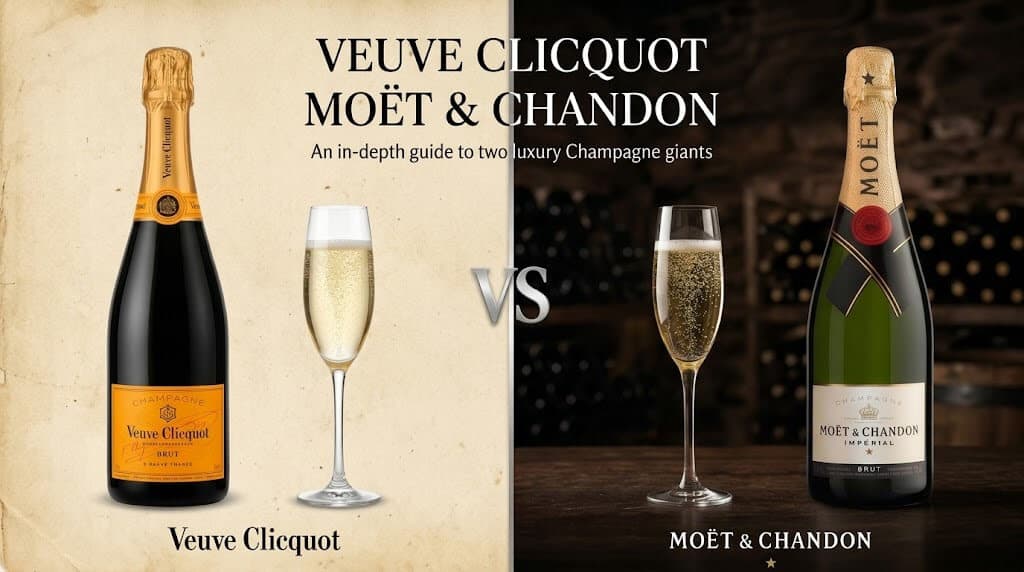
When shopping for a premium Champagne gift, Moët & Chandon and Veuve Clicquot are often the first two names that come to mind. Since they're priced similarly, choosing between them isn't always easy.
The real difference isn't the cost; it's their taste, style, and the impression they create as a gift. In this guide, we'll compare both Champagnes side by side to help you decide which one best suits your celebration and the person you're gifting.
Moët vs. Veuve Clicquot at a Glance
| Factor | Moët & Chandon Impérial | Veuve Clicquot Yellow Label |
|---|---|---|
| Price (verified July 2026) | ~$50–$65 | ~$55–$75 |
| Taste | Fruity, light, approachable | Bold, toasty, structured |
| Dominant grape | Balanced blend: Pinot Noir 30–40%, Meunier 30–40%, Chardonnay 20–30% | Pinot Noir-led: Pinot Noir 50–55%, Chardonnay 28–33%, Meunier 15–20% |
| Reserve wines | 20–30% | Up to 45% |
| Dosage | 7 g/L | 9 g/L |
| Wines in the blend | 100+ wines | 50–60 crus |
| House | Épernay, founded 1743 | Reims, founded 1772 |
| ABV | 12% | 12% |
| Body | Light | Medium |
| Packaging | Classic gold label | Iconic yellow label |
| Best for | Parties, NYE, graduations, groups | Weddings, anniversaries, corporate gifts |
Sources: blend, reserve-wine, dosage and cru figures from moet.com and veuveclicquot.com.
Two Different Legacies — Where Each House Comes From
Moët & Chandon's Story
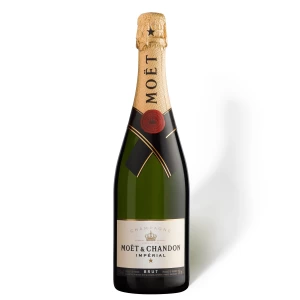
Founded in 1743, Moët & Chandon is the world's largest champagne producer. From the start, its philosophy has centered on accessibility, making high-quality champagne that's approachable, consistent, and instantly enjoyable, without requiring years of cellaring or expert knowledge to appreciate. Read more in our Moët & Chandon guide.
Veuve Clicquot's Story
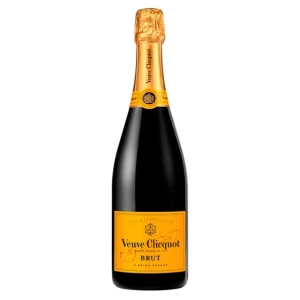
Veuve Clicquot's story, dating back to 1772, is one of innovation and defiance. After her husband's death, Barbe-Nicole Ponsardin, the "Widow (Veuve) Clicquot," took over the business and pioneered riddling (remuage), a technique that's still fundamental to champagne-making today.
That spirit of boldness carried directly into the wine's taste. Read more in our Veuve Clicquot guide.
The Grape Blend Explains Everything
This is where the real difference begins. Moët leans on a more balanced three-grape blend: Pinot Noir, Chardonnay, and Pinot Meunier, with a noticeably higher share of Pinot Meunier than most other houses use (30–40% each of Pinot Noir and Meunier, 20–30% Chardonnay). This is exactly what gives Moët its soft, fruity, easy-drinking character.
Veuve Clicquot, on the other hand, is built around a Pinot Noir-dominant blend, often making up more than half the composition (50–55%), with up to 45% reserve wines adding depth. That heavier reliance on Pinot Noir is the single biggest reason Veuve tastes noticeably bolder and more structured than Moët — it's not a stylistic choice, it's a compositional one.
Learn more about each grape in our Champagne grape varieties guide.
What's the Difference in Taste?
Moët & Chandon
Bright, youthful fruit — think peach, apple, and a touch of citrus layered over a soft, creamy mousse. It's designed to be immediately enjoyable, with nothing complicated standing between you and the first sip. Champagne built for charm, not contemplation.
Veuve Clicquot
More weight on the palate: notes of brioche and toasted bread wrapped in a smooth, elegant texture that still feels vibrant. Bold enough to impress, balanced enough to please almost anyone.
Worth knowing: in Drinks International's 2020 survey of 106 top bars worldwide, Veuve Clicquot was named the best-selling champagne, unseating Moët, the long-time champion.
In simple terms, Moët & Chandon is fresh, fruity, and approachable, while Veuve Clicquot is richer, toastier, and more structured. The better choice depends on whether you prefer an easy-drinking style or a bolder Champagne with greater depth.
Price Comparison
Moët and Veuve Clicquot each make more than one bottle, so the price you pay depends on which one you pick. Here's a quick look at what each house offers before we compare the numbers.
Moët & Chandon's Lineup
Most people start with Moët Impérial, the house's classic non-vintage Brut and the bottle you'll spot at almost every party. Next comes the Rosé Impérial, a fruity, berry-forward option that's popular for romantic gifts.
For sweeter tastes, there's Nectar Impérial, and Ice Impérial is made specifically to be poured over ice. Stepping up, the Grand Vintage is made only in select harvest years and adds single-year character. At the very top sits Dom Pérignon, Moët's prestige cuvée.
Veuve Clicquot's Lineup
Veuve's star is the Yellow Label Brut, its signature non-vintage champagne and the one behind that famous orange-yellow label. The Rosé offers the same house style with a fuller red-fruit profile, while Rich is Veuve's sweeter answer for people who find Brut too dry.
Veuve Clicquot Vintage is released only in strong harvest years, and La Grande Dame is the house's prestige cuvée, named after Madame Clicquot herself.
Now that you know what's on offer, here's how the prices compare.
| Champagne | Type | Approx. Price |
|---|---|---|
| Moët Impérial Brut | Non-Vintage | ~$50–$65 |
| Veuve Clicquot Yellow Label | Non-Vintage | ~$55–$75 |
| Moët Rosé Impérial | Non-Vintage | ~$65–$85 |
| Veuve Clicquot Rosé | Non-Vintage | ~$70–$90 |
| Moët Nectar Impérial | Non-Vintage (sweeter) | ~$60–$75 |
| Veuve Clicquot Rich | Non-Vintage (sweeter) | ~$65–$85 |
| Moët Grand Vintage | Vintage | ~$75–$95 |
| Veuve Clicquot Vintage | Vintage | ~$80–$100 |
| Veuve Clicquot La Grande Dame | Prestige Vintage | ~$170–$200 |
| Dom Pérignon Vintage | Prestige Vintage | ~$200–$280+ |
Which One Actually Fits Your Occasion
Choose Moët & Chandon if you: Prefer a fresh, light, fruit-forward champagne that's easy to enjoy; are buying for someone new to premium champagne; or want a versatile, crowd-pleasing bottle for birthdays, graduations, housewarmings, and casual celebrations.
Choose Veuve Clicquot if you enjoy a richer, fuller-bodied champagne with more structure; want an iconic bottle that's instantly recognized as a luxury gift; or are shopping for weddings, anniversaries, or corporate gifting where presentation matters.
Prefer something sweeter or pink? Each house has an answer: Moët Nectar Impérial and Ice Impérial (made for serving over ice) on one side, Veuve Clicquot Rich and Rosé on the other — a fun head-to-head for our best champagnes for Valentine's Day list. Planning to pour over ice or mix? See our champagne cocktail ideas.
Food Pairing — What to Serve With Each
Moët Impérial Brut, with its light and fruity profile, pairs effortlessly with fresh seafood, sushi, and soft cheeses — food that doesn't overpower its delicate character. Moët Rosé Impérial, with its slightly riper fruit notes, works beautifully alongside light desserts or fruit-based dishes, making it a natural fit for celebratory brunches.
Veuve Clicquot Yellow Label's bolder, toastier profile can hold its own against richer dishes: roasted poultry, mushroom-based dishes, and aged cheeses all complement it well.
The added warmth and richness of the Veuve Clicquot Rosé make it a better pairing for red berry desserts or even light red meats, so it's a natural fit for a more elevated, sit-down dinner. More ideas in our champagne food pairing guide.
Packaging That Changes the First Impression
Before anyone tastes the Champagne, they notice the bottle. Moët & Chandon keeps its presentation classic and understated with its signature gold accents, making it feel festive without being overly formal. Veuve Clicquot, on the other hand, grabs attention immediately with its unmistakable Yellow Label, a design that's become synonymous with luxury gifting around the world.
If you're handing someone a bottle in person, Veuve naturally creates a stronger first impression, while Moët feels more relaxed and celebration-focused. Neither is better; the choice simply depends on the kind of impression you want your gift to make.
Our Verdict
For celebrations that call for something elegant yet easygoing, Moët & Chandon fits the mood perfectly. But if the goal is to make a bolder luxury statement through both taste and presentation, Veuve Clicquot edges ahead, thanks to its richer character and that unmistakable Yellow Label.
Both bottles land in a similar price range, so really, this isn't a budget decision. It comes down to the occasion itself, and who you're buying it for. Considering a prestige bottle too? See our Moët vs. Veuve Clicquot vs. Dom Pérignon gift guide.
Ready to find the perfect champagne gift? Explore our curated collection of Moët & Chandon and Veuve Clicquot gift baskets, luxury gift boxes, and fast delivery options.
Champagne Gift Delivery
Found the bottle you want? Getting it there on time matters just as much as choosing it, so a last-minute birthday, anniversary, or thank-you doesn't have to stay last-minute.
Standard delivery takes 2 to 5 business days to states where wine shipping is permitted. Next-day delivery is available in selected areas of the Northeast, and same-day delivery is available in selected areas for orders placed before 2 p.m. on business days. See our delivery and shipping policy for full details.
What You Can Send
Every bottle in this guide is available, from Moët Impérial to Veuve Clicquot Yellow Label. You can send a single bottle, or turn it into a full gift with add-ons:
- Gift baskets and sets with chocolates, gourmet snacks, or cheese
- Champagne flutes to make the gift ready to open
- Luxury gift boxes for a more polished presentation
FAQ
Is Moët or Veuve Clicquot the better gift?
Veuve Clicquot tends to feel like the slightly more premium gift, thanks to its bold taste and instantly recognizable yellow label. Moët holds its own for lighter budgets and group celebrations, priced a little lower while still being widely loved.
Does the yellow label actually mean something, or is it just branding?
Both, honestly. Veuve Clicquot's yellow label has become shorthand for "this is a proper gift" in the wine world. That recognizability is part of why it performs so well as a gift — even before the recipient tastes it.
Which is better for New Year's Eve?
Moët — it's practically the official champagne of midnight. Light, festive, and easy to pour for a crowd. Save the Veuve for the anniversary dinner in February.
Why does Veuve Clicquot taste bolder than Moët & Chandon?
It comes down to the grape blend. Veuve Clicquot uses a noticeably higher percentage of Pinot Noir in its blend, which adds structure, richer red-fruit notes, and fuller mouthfeel. Moët & Chandon leans more on Pinot Meunier, giving it that lighter, fruitier, more immediate character that's easier to drink young.
Moët vs Veuve Clicquot — what's the real difference for gifting?
The biggest difference is boldness. Moët & Chandon leans on Pinot Meunier, giving it a lighter, fruitier taste that's easy to enjoy right away — great for casual celebrations. Veuve Clicquot uses a higher share of Pinot Noir, which makes it richer and more structured, and its iconic yellow label instantly reads as a more premium gift.
If budget allows, Veuve Clicquot generally makes the stronger impression; if not, Moët still delivers a solid, well-loved gift.