


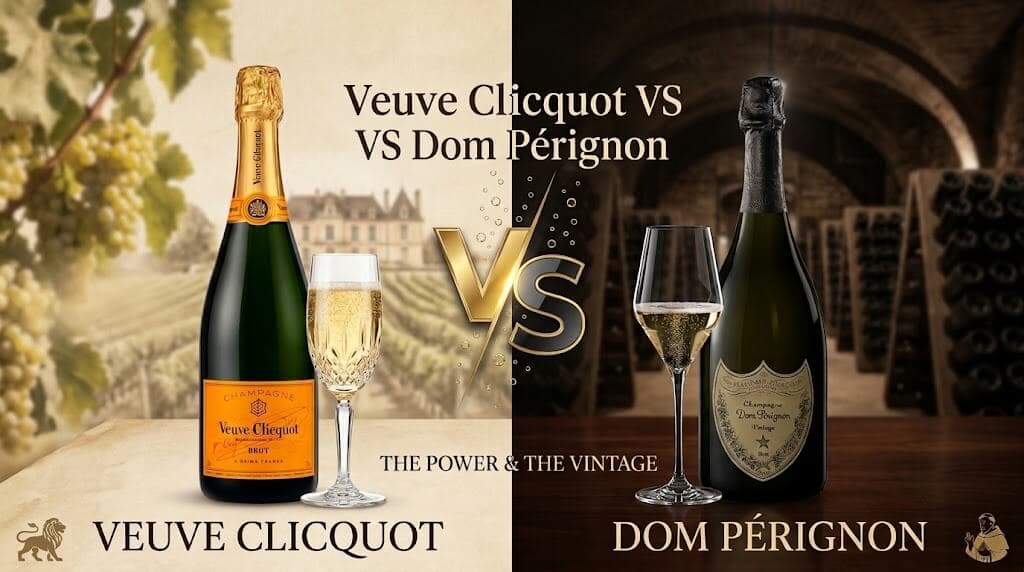
Standing in the champagne aisle, looking at a bottle around $70 and another around $200+? Totally normal. You're not the first person to wonder if the pricey one is really that much better.
Here's the short version. Veuve Clicquot is the crowd-pleaser you can pop at almost any celebration. Save Dom Pérignon for the moments you want to remember, like a big wedding or a major milestone. Both are excellent. The right pick depends on your occasion and your budget, and by the end of this guide you'll know which one is yours.
Veuve Clicquot vs. Dom Perignon: Quick Comparison at a Glance
Short answer: Veuve Clicquot is a bold, fruity, easy-to-find champagne that works for everyday celebrations. Dom Perignon is a vintage-only prestige champagne that's more refined and complex, best for gifts and milestones. Dom Pérignon usually costs about three times as much.
| Veuve Clicquot Yellow Label | Dom Perignon Vintage | |
|---|---|---|
| Style | Non-vintage, Pinot Noir-led | Vintage-only, prestige cuvée |
| Grapes | Pinot Noir 50–55%, Chardonnay 28–33%, Pinot Meunier 15–20% | Chardonnay and Pinot Noir (varies by vintage) |
| Aging before release | Non-vintage, released ready to drink | At least eight years |
| Taste | Fruity, toasty, full-bodied | Creamy, layered, polished |
| Best for | Parties, brunch, regular celebrations | Weddings, milestones, special gifts |
| Approx. price (USD) | $55 to $75 | $200+ |
Prices are approximate and change by store and state. Check current prices before you buy. Blend from veuveclicquot.com; aging from LVMH.
Champagne Basics: Non-Vintage vs. Vintage vs. Prestige Cuvée
Before we compare the two bottles, let's get a few words straight. They'll make every label you see much easier to read.
What Is Non-Vintage Champagne?
Non-vintage (NV) champagne is made by blending wines from several harvests. Why? So the bottle tastes the same year after year. Veuve Clicquot Yellow Label is the most famous example. When you buy it, you know what you're getting.
What Are Vintage and Prestige Cuvée Champagnes?
A vintage champagne comes from the grapes of one single year, and only when that year was good enough. A prestige cuvée is a house's top bottle, made with extra care and usually aged much longer. Dom Pérignon is both: vintage-only and the prestige bottle of its house. Learn more in our vintage vs. non-vintage champagne guide.
How Do You Read a Champagne Label?
Look for the sweetness word. Brut means dry, and it's what most people drink. Extra Brut is even drier. Demi-Sec is noticeably sweet. The sweetness comes from "dosage," a small amount of sugar added at the end. If you're not sure, Brut is the safe choice. See our Brut champagne guide.
What Is Veuve Clicquot? The Champagne Almost Everyone Knows
If you've seen a bright yellow-orange label at a party, that was probably Veuve Clicquot (say it "Vuv Klee-koh").
The Story Behind the Label
The house was founded in 1772. After her husband died, Madame Clicquot took over the business when she was in her twenties, and she's remembered as one of the great business minds of her era. "Veuve" simply means "widow." She's also widely credited with improving how champagne is cleared of sediment, which made it clearer and more polished.
Read the full story in our Veuve Clicquot guide.
What Does Yellow Label Taste Like?
Think ripe apple, citrus, and a little toast, with a full, rounded feel. It's led by Pinot Noir, which gives it body, and it uses plenty of older reserve wines (up to 45% of the blend), which add depth. It's bold without being fussy, which is why so many people love it.
The Veuve Clicquot Range
- Yellow Label Brut: the classic and the best starting point
- Rosé: a pink version with red-berry flavors
- Rich: sweeter, made with mixing and cocktails in mind
- Vintage: single-year bottles with more depth
- La Grande Dame: the house's prestige bottle
What Is Dom Pérignon? The Prestige Cuvée Explained
Dom Pérignon (say "Dom Pay-ree-nyon") is the bottle people think of when they picture luxury champagne.
Monk or Champagne?
Funny thing: the name comes from a real person, a Benedictine monk from the 1600s who was a cellar master in Champagne. He was famous for his skill with blending. The champagne we buy today is a modern creation from the 20th century that simply honors his name.
Both Dom Pérignon and Veuve Clicquot are owned by the same luxury group, LVMH. Read our Dom Pérignon ultimate guide.
Why It's Made Only in Great Years
LVMH may own both houses, but they're run very differently. Dom Pérignon is made only in years when the harvest is strong enough, and then it ages for at least eight years before release. In an average year, there's simply no Dom Pérignon. That's a big reason it's limited and costs more.
What Does It Taste Like?
Creamy, smooth, and layered. You may pick up citrus, white flowers, a hint of toast, and a long, clean finish. It's less loud than Veuve Clicquot and more polished.
The Dom Pérignon Range
- Vintage: the main bottle
- Rosé Vintage: richer, with red-fruit notes
- P2 and P3: special releases aged far longer before they come out (15 years or more for P2)
- Collector editions: limited gift boxes and designs
Grape Varieties and Blend: What Goes Into Each Bottle?
You don't need to be a wine expert for this part. Just know that champagne is made mostly from three grapes, and each does a different job.
The Three Champagne Grapes
- Pinot Noir adds body, structure, and red-fruit flavor.
- Chardonnay adds freshness, elegance, and citrus.
- Pinot Meunier adds soft, juicy fruitiness.
Learn more in our champagne grape varieties guide.
Veuve Clicquot's Blend
Yellow Label is Pinot Noir-led and blends in Chardonnay and Pinot Meunier. Up to 45% of the wine comes from older reserve vintages. That's how the taste stays so consistent from bottle to bottle.
Dom Pérignon's Blend
Dom Pérignon uses only Chardonnay and Pinot Noir. There's no Pinot Meunier. The mix shifts a little each vintage, depending on how that year's grapes turned out.
How the Blend Affects Taste and Price
Veuve Clicquot's blend gives you a bold, fruity, instantly likable style. Dom Pérignon's tighter blend and single-year grapes give you a more refined, layered result. The extra selection and aging are part of what you pay for.
Veuve Clicquot and Dom Perignon Ranges: Which Bottle Is for Whom?
Both houses make more than one bottle, so here's a simple way to shop.
If you're a first-time buyer: Start with Veuve Clicquot Yellow Label Brut. It's the easiest, safest introduction.
If you want something pink: Veuve Clicquot Rosé works well for brunch, showers, and summer parties.
If you're gifting someone special: Dom Pérignon Vintage, ideally in its gift box.
If you want a step up without the full Dom price: Veuve Clicquot Vintage or La Grande Dame (more on this below).
If you're a collector: Look at Dom Perignon Rosé and the P2 or P3 releases.
Not every bottle is in stock everywhere, so availability can change.
Taste, Aroma and Texture: How Do They Really Differ?
Aroma and Flavor
Veuve Clicquot smells like green apple, lemon, and fresh bread, with a toasty edge. Dom Pérignon is more subtle and layered. You'll find citrus, flowers, and nutty or smoky hints that show up as it opens in the glass.
Bubbles and Mouthfeel
Veuve Clicquot feels lively and full. Dom Pérignon has a finer, creamier bubble that feels smooth rather than sharp.
The Finish
Veuve Clicquot ends bright and fruity. Dom Pérignon lingers longer and keeps changing as you sip.
Can a Beginner Taste the Difference?
Often, yes, but it's subtle. Many people notice Dom Pérignon feels smoother and more refined. If you're drinking it at a loud party with a hundred guests, you may not notice much. The difference shows up when you sip slowly, with good glasses and good company.
Why Is Dom Pérignon About 3x More Expensive?
Aging and Selection
Dom Pérignon is aged for at least eight years before release, which ties up money and cellar space. It's made only in great years, and only the best grapes make the cut.
Limited Supply and Brand Power
Fewer bottles, high demand and a famous name all push the price up. Part of what you're buying is the story and the experience.
Why Prices Differ by Store and State
You'll see different prices at different shops. Retail markup, local taxes, shipping rules and special editions all play a part. Compare two or three trusted sellers, and check whether a gift box is included before you decide.
Is Dom Pérignon Really Worth the Extra Money?
Honestly? Sometimes yes, sometimes no.
When It's Worth It
- Weddings and anniversaries: it feels special, and people remember it
- Major milestones: a promotion, a graduation, a big birthday
- Gifts: the box and the name carry real impact
- Collecting: vintage bottles can be kept for years
When It Isn't
- Large casual parties: the nuance gets lost in the noise
- Cocktails and mixing: you're better off with something lighter (see our champagne cocktail ideas)
- Tight budgets: you'd be stretching for a small difference
The Smart Middle Option
Here's something many people don't know. Decanter rated Dom Pérignon 2009 at 96 points and Veuve Clicquot La Grande Dame 2006 at 95 points. So the quality gap isn't always as big as the price gap.
A vintage Veuve Clicquot or La Grande Dame can be a great way to get "special occasion" quality without the top-tier price tag.
Which Champagne Is Right for You?
Choose Veuve Clicquot If…
- You're buying your first bottle of real champagne
- You're hosting friends or a casual celebration
- You want great quality for a friendlier price
- You'll be serving several people
Choose Dom Pérignon If…
- You're attending or celebrating a big wedding or milestone
- You want a gift that feels truly luxurious
- You love the look of the bottle, the design, and the story
- You want a bottle that works whether you're a beginner or a seasoned wine lover
Still Not Sure? Pick by Occasion
| Occasion | Our pick |
|---|---|
| Weekend brunch | Veuve Clicquot Rosé |
| New Year's Eve party | Veuve Clicquot Yellow Label |
| Anniversary dinner | Dom Pérignon Vintage |
| Wedding gift | Dom Pérignon (gift box) |
| Graduation | Veuve Clicquot Vintage |
| Corporate gift | Dom Pérignon or La Grande Dame |
Also weighing Moët? Read our Moët vs. Veuve Clicquot vs. Dom Pérignon gift guide.
Make It a Gift: What to Pair With Your Bottle
A bottle of Veuve Clicquot or Dom Pérignon is a great gift all on its own. But if you want the person to feel like you really thought about them, adding one small extra makes a big difference.
Here are a few easy ideas, and why they work:
For an anniversary: Dom Pérignon + dark chocolate. Rich, slightly bitter chocolate makes the creamy, layered taste of the champagne stand out. It also feels romantic without trying too hard.
For a wedding gift: Dom Pérignon + a pair of nice champagne glasses. The couple can use them for the first toast, and they'll remember who gave them. Try Dom Pérignon with Tiffany crystal glasses.
For a birthday or brunch: Veuve Clicquot Rosé + fresh strawberries or macarons. The berry notes in the rosé match the fruit, and the whole thing looks lovely on the table.
For a housewarming: Veuve Clicquot Yellow Label + salted nuts or a small cheese board. The salt and the bubbles are a classic combo, and it's easy for the host to open and share right away.
For a promotion or graduation: Veuve Clicquot Vintage + a handwritten note. The bottle says "congratulations," and the note says "I'm proud of you."
Not sure what goes with what? No stress. Browse our gift collection, where bottles and extras are paired by occasion, so you can pick something that feels personal without the guesswork.
How to Serve and Store Champagne Like a Pro
Temperature: Chill it to around 45 to 50°F. Colder dulls the flavor; warmer makes it foamy. About 3 hours in the fridge, or 30 minutes in an ice bucket with water and ice.
Glass: Skip the tall skinny flute if you can. A tulip or white wine glass lets the aromas open up. See champagne glasses vs. wine glasses.
Opening: Keep the bottle at a slight angle, hold the cork firmly, and turn the bottle slowly. You want a soft sigh, not a loud pop.
Food pairings: Oysters, sushi, popcorn, and fried chicken are all great with champagne. For brunch, try eggs and smoked salmon. More in our champagne food pairing guide.
Storage: Keep bottles in a cool, dark place away from heat and sunlight. Non-vintage is best enjoyed within a few years. Vintage bottles can rest longer.
Final Verdict: Ready to Pick Your Bottle?
Here's the simple version. If you want a crowd-pleasing bottle you can enjoy often, go with Veuve Clicquot. If you're marking a once-in-a-while moment and want something that feels unforgettable, go with Dom Pérignon. And if you want to land somewhere in between, a vintage Veuve Clicquot or La Grande Dame is a smart move.
Whichever you pick, the best champagne is the one that's shared with the right people.
Browse Our Collection and find your champagne gift today.
Shop Veuve Clicquot Shop Dom Pérignon
Please drink responsibly. Must be 21+ to purchase.
FAQs
Is Dom Pérignon better than Veuve Clicquot?
Dom Pérignon is more refined and complex, but "better" depends on the moment. Veuve Clicquot is easier to enjoy at casual events.
Why is Dom Pérignon so expensive?
It's made only in great years, aged for years, and produced in smaller amounts. The brand's reputation adds to the price.
Is Veuve Clicquot a good champagne for beginners?
Yes. Yellow Label is one of the most popular first-time champagnes.
Which one is better for gifting?
For big gifts, Dom Pérignon in its gift box leaves a stronger impression. For a friendly gift, Veuve Clicquot is a safe and welcome choice.
How long can you store champagne?
Non-vintage is best within a few years of buying. Vintage champagne can age longer if stored properly.