

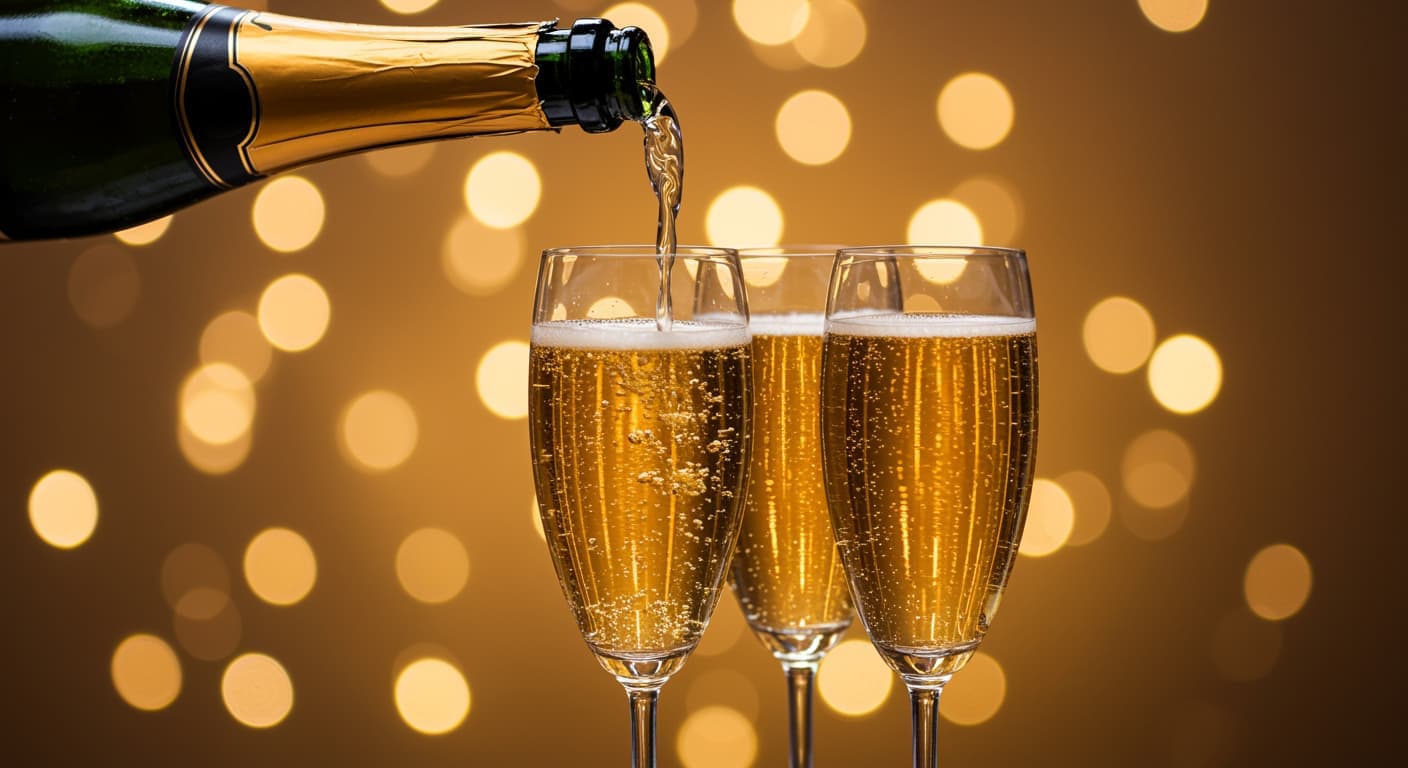
Champagne needs no introduction, as for centuries it has remained a symbol of celebration and elegance. But, what goes on behind the scenes is a magical craft, worth understanding. Why is Champagne synonymous with luxury and what makes it special compared to other sparkling wines ?
This Champagne guide for beginners will break it down clearly, simply, and most enjoyably so that you understand the process and the product.
What Is Champagne?
Champagne is a sparkling wine that comes exclusively from the Champagne region of France, produced using methods directed by the region’s wine law. Wines made only in this region, using allowed grape varieties and production method, can be called ‘Champagne’- it is a sparkling wine that comes with a PDO label (Protected Designation of Origin).
The primary grape varieties used for Champagne are:
- Chardonnay - The hero white grape that brings in freshness, citrusy goodness, and bright acidity.
- Pinot Noir - A black grape variety known for its red fruit flavours. It adds body, structure, and red-berry fruit notes to champagne.
- Pinot Meunier - A black grape variety with fruitiness, softens the Champagne making it more approachable and balanced.
A blend of these grape varieties and a unique production method is what gives Champagne its signature balanced acidity, flavour complexity, and fine, persistent bubbles.
Did you know - A total of 7 grape varieties are allowed for Champagne production, but Chardonnay, Pinot Noir and Meunier are most commonly used. What are those lesser known Champagne grapes?
How Is Champagne Made?
Let us understand how Champagne is made and what makes it more special, complex, and expensive than other sparkling wines.
Champagne is produced using the Traditional Method or Méthode Traditionelle, which includes two fermentations and a series of steps that occur in a certain order. It is a method that’s resonant with Champagne’s age-old traditions and unique craftsmanship.
Let’s see what Champagne production method actually entails:
- First fermentation - A dry and still base wine is made. Skins of black grapes are not used during production unless it's a rosé champagne, made using a particular method.
- Blending (Assemblage) - Dry wines from different grape varieties, vineyards parcels, and different years are blended. This blend largely depends on the house style of the Champagne brand.
- Second fermentation in bottle - At this stage sugar and yeast are added to the dry base wine, a temporary crown cap seal is put on, and bottles are stored horizontally for the second fermentation to take place. As a result of this fermentation, CO2 bubbles are generated and overall alcohol percentage goes up slightly.
- Lees ageing - After second fermentation Champagne ages on dead yeast compound called ‘lees’, and starts gaining complex bread and sourdough notes which are a result of reaction between flavour compounds of Champagne and lees. Every Champagne by law, has to spend at least 12 months on lees, in practice this period is much higher, specially for premium Champagne brands and styles.
- Riddling - Once lees ageing period concludes, the dead yeast compound is gradually collected in the bottle’s neck, by a gingerly carried out movement (Riddling) that can be done manually or through machines.
- Disgorgement - Sediment in the bottle’s neck is ejected out, causing a bit of a soft explosion wherein some Champagne may be lost too.
- Dosage - Finally, a small amount of sugar and wine mixture known as liqueur d’expedition is added to Champagne, this is done to attain overall balance and could also be essential to determine the final style of Champagne.
This process which begins in Champagne region’s best vineyards where chalky soils yield high quality grapes - is meticulous, requires time, patience, and expertise, all of which sets Champagne apart from other sparkling wines.
Understanding Champagne Styles
To find your favorite bottle, it helps to understand how sugar levels and harvest years are labeled. Explore our guide on the different types of Champagne.
What Is Brut Champagne?
‘Brut’ literally means ‘raw’ but in terms of Champagne it refers to a style based on sweetness or sugar level. Brut Champagne is dry but, at times can give a faint hint of sweetness lingering on the palate. Sugar levels in Brut Champagne can vary but remain below 12grams/litre. This sweetness hides quietly behind champagne’s naturally high, signature acidity, and is often essential to balance the same.
Brut Champagne tastes dry, crisp, and refreshing, a perfect choice for an aperitif and a great accompaniment when you’re pairing Champagne and Food. Brut Champagne is the most common style, one that’s versatile and a great one to choose every time.
What Is Vintage Champagne?
The term ‘Vintage’ in the wine world refers to the year of the harvest of grapes. Vintage Champagne is made using grapes solely from the harvest of a single, exceptional year. A vintage is declared when the growing year showcases the most apt weather conditions, allowing grapes to attain great balance that allows for a production of premium quality Champagne.
Since vintage Champagnes are produced only when the harvest quality is outstanding, they are aged for a very long time before release, often way more than what the regional laws state, thus offering - great complexity and bottle-ageing potential, making them very age-worthy and a great option for collectors and fine Champagne gifting.
Discover the nuances in our vintage vs non-vintage Champagne guide.
What Is Sweet Champagne Called?
Sweet Champagne can have various terms, each signifying different levels of sweetness. ‘Doux’ is luscious, sweetest style of Champagne and a rare one in present times which comes with over 50 grams/litre of sugar - something most of the serious and health conscious wine drinkers would steer clear of.
Other, more common styles of sweet Champagne are :
- Sec that houses 17-32 grams/litre of sugar,
- Demi-Sec holds sugar from 32-50 grams/litre,
- Extra -Dry with 12-17 grams/litre of sugar,
- Brut with less than 12 grams/litre of sugar (yes! Extra-Dry is ironically more sweeter than Brut).
- Brut-Nature or Zero-Dosage with no sugar at all is the most crispy and bone-dry style of Champagne.
Sec means dry.
What Is Rosé Champagne?
Rosé Champagne is style of Champagne made in the Champagne region of France, getting its pink colour by either ‘Blending’ a small amount of still red wine from Pinot Noir or Meunier into a white base wine (most common and legally permitted in Champagne) or, less commonly, by a short skin contact or short maceration method (Saignée method).
For those interested in color and profile differences, check out the difference between Brut and Rosé Champagne.
Champagne vs. Prosecco : What’s the Difference?
| Champagne | Prosecco |
|---|---|
| France (Champagne region) | Italy |
| Traditional method | Tank method |
| Finer bubbles | Larger bubbles |
| More complex flavours | More fruit-forward flavour profile |
The difference between these two famous sparkling wines is significant. While Champagne is more about finesse and ageing; Prosecco is about freshness, immediacy, and ease of drinking. Both have their own place in the universe of sparkling wine, taking their own sweet spots depending upon the mood, food, and the occasion. For a full deep-dive, see Champagne vs Prosecco.
How Long Does Champagne Last Unopened?
Right and careful storage is the key for all Champagne bottles to have a lasting goodness until they’re opened for consumption. Cool and constant temperature, dark place (no direct light), and minimal disturbance by the way of movement are necessary to ensure Champagne bottles last long. Apart from proper storage conditions, how long an unopened Champagne bottle lasts, also depends on whether it’s a vintage or a Non-Vintage champagne.
Non-vintage Champagne can last unopened for 3-5 years because flavours are fresher and evolve positively for a few years, gaining subtle complexity. Anything beyond this ageing window, the freshness and overall balance of the non-vintage champagne could be at stake. Vintage Champagne on the other hand, enjoys more longevity as it already has the flavour concentration, capable of evolving and going more depth for much longer time in the bottle. 5-10+ years of bottle ageing is not uncommon on vintage champagnes, some super-premium ones can easily age-well for decades.
Most Popular Champagne Brands
- Dom Pérignon: A prestige vintage Champagne known for ultra-luxury appeal.
- Veuve Clicquot: Famous for its bold and structured Yellow Label Brut.
- Billecart-Salmon: A family-run house known for quality consistency.
Several brands stand out for their consistency and prestige. You can view more popular Champagne brands here.
What Is a Good Champagne to Give as a Gift?
Champagne is a perfect, classic, and a timeless choice for a gift. Whether you are looking for Champagne for weddings or Valentine's Day, it never fails to impress. Well-known Champagne brands have a recognisability that instantly speaks of a brand’s appeal. A good champagne to give as a gift should be balanced and complex, one that has some longevity and yet offers ease of drinking at every stage.
Check our Champagne gift ideas for more inspiration.
Special feature : The Ultimate Milestone Birthdays Gift Guide: Golden, Diamond, and Beyond
What Can Champagne Be Mixed With?
While you’ll mostly see purists enjoying Champagne on its own, there are some classic mixes that create time-tested Champagne cocktails. Let's take a look:
- Mimosa - A simple, no-fail, classic brunch cocktail. All you need is some freshly squeezed orange juice and a well chilled Champagne, combine them in equal parts and serve in a Champagne flute. Effortless and ever-so refreshing.
- Bellini - This one’s made with Prosecco but Champagne would be great to elevate this drink even more. Add two parts chilled Champagne to one part peach purée (try to use ripe peaches for a balanced flavour set) and you’ve created another brunch drink that is sure to keep the conversations flowing.
- Kir Royale - A simple French cocktail made by adding a splash of créme de cassis (blackcurrant liqueur) to a Champagne flute and topping it up with well chilled Champagne. Garnish with a berry to further elevate this sweetly balanced, bubbly drink.
Looking for a bunch of stunning cocktails to elevate your wine party? We’ve got you covered with our list of favourite Wine & Champagne Cocktails with their detailed recipes.
Final Bubbly Thoughts
Champagne is much more than the sparkles and bubbles, it’s about patience and craftsmanship that go into the process of creating this celebrated style of wine. It is also about how champagne becomes a quiet, but an integral part of life’s important milestones, achievements, and gatherings fuelled by fun, family and friendship. Use this guide to choose your favourite Champagne bottle next time. Cheers !!
Frequently Asked Questions About Champagne
What is a good Champagne?
A good Champagne is the one that offers balance, freshness, and ease of drinking. Brut styles from reputed houses are a great place to start.
What is the best Champagne?
The "best" champagne often depends on personal taste and the specific occasion. For luxury and prestige, Dom Pérignon is a standout; for a rich and structured profile, Bollinger is highly recommended; and for pure elegance and finesse, Ruinart is an exceptional choice.
What are the top 10 Champagne brands?
The most globally recognized and respected Champagne brands include:
- Dom Pérignon
- Krug
- Bollinger
- Veuve Clicquot
- Moët & Chandon
- Pol Roger
- Ruinart
- Taittinger
- Louis Roederer
- Billecart-Salmon
What is a good Champagne to drink casually?
For everyday enjoyment or casual gatherings, a Non-Vintage (NV) Brut Champagne is ideal. It provides the classic bubbly experience with a consistent flavor profile that doesn't require a special occasion to uncork.
If you want your gifts to say that you’ve gone an extra mile, explore our full Champagne collection to find your next bottle. Or choose from curated collection of Champagne Gift Baskets, where each basket is individually curated keeping in mind life’s many occasions.