

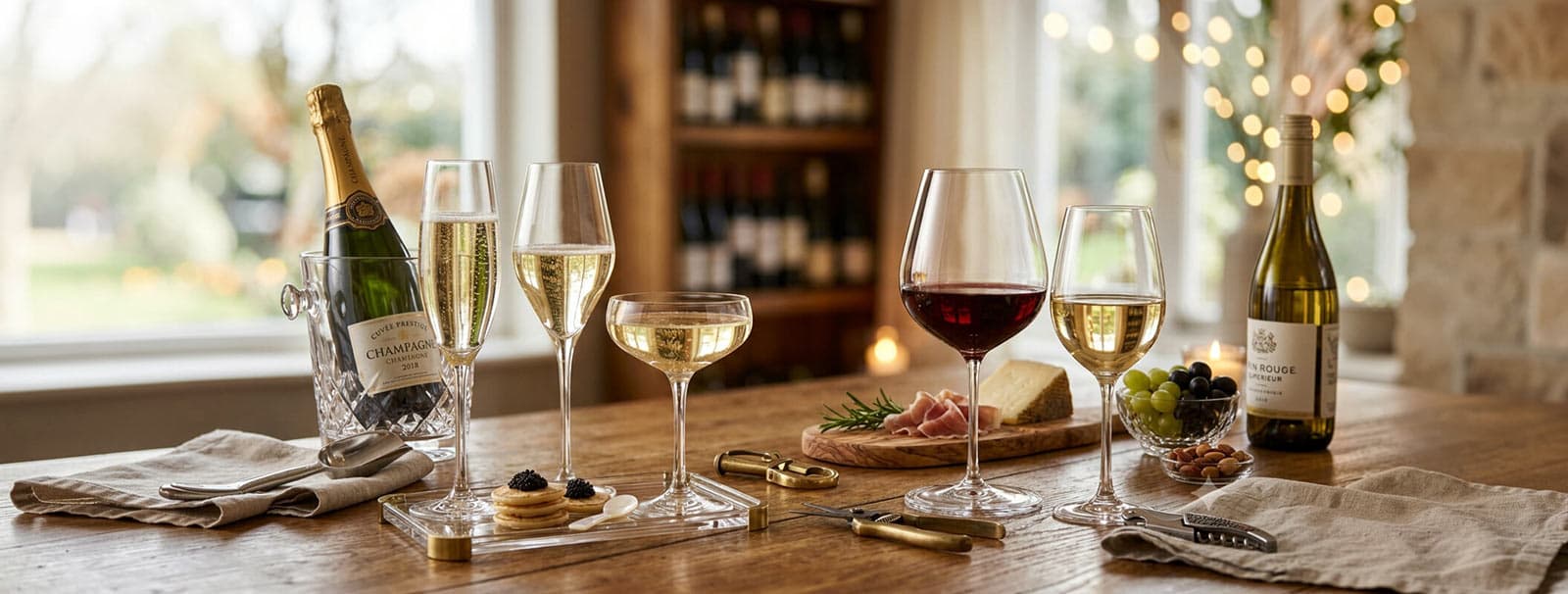
A great bottle of wine or Champagne deserves the right glass. While glassware or stemware may seem like a simple accessory, the shape, the size, the quality, and the design of a glass can influence how a drink looks, smells, and tastes. A Champagne glass creates an elegant, sparkly celebration moment, while a beautifully designed wine glass helps reveal the aromas and character of any still wine.
This is why choosing between Champagne glasses vs. wine glasses is not only about appearance but also about creating the right wine experience.
Champagne Glasses vs. Wine Glasses: What Is The Difference?
The foremost difference between Champagne and wine glasses lies in their purpose. Champagne glass is designed to protect and showcase the delicate effervescence of sparkling wines, while wine glasses are created to enhance aromas, flavours, and overall texture of still wines.
| Feature | Champagne Glasses | Wine Glasses |
|---|---|---|
| Designed for | Champagne and all kinds of sparkling wines | Red, white, rosé and still wines |
| Main purpose | Preserve bubbles and freshness | Enhance aroma and flavour |
| Shape | Tall, narrow, coupe, or tulip-shaped | Varying bowl sizes with different designs |
| Drinking experience | Crisp, refreshing and celebratory | Aromatic and flavour-focused |
| Best suited for | Toasts and special occasions | Everyday enjoyment and wine appreciation |
Types of Champagne Glasses: Flute, Coupe, Tulip & More
Not all Champagne glasses are created equal. Choosing the right style can transform how a Champagne looks, smells, and tastes — and for gifting, the style of the glass is as much a statement as the bottle it accompanies. Here is a guide to the four main types.
Champagne Flute
The flute is the most iconic and widely recognised Champagne glass. Its tall, narrow bowl minimises surface area, which slows the escape of CO₂ and keeps bubbles rising gracefully for longer. Flutes are elegant, practical, and perfect for toasts, celebrations, and NV (non-vintage) Champagne where freshness and effervescence are the main attractions.
- Best for: Celebratory toasts, NV Champagne, sparkling wine, Prosecco and Cava
- Key advantage: Preserves carbonation and creates a beautiful, elongated bubble stream
- Gift appeal: Universally recognised as the classic Champagne glass — always a safe, elegant choice
Champagne Coupe
The coupe — also called a saucer glass — is the shallow, wide-bowled glass that defined Champagne service from the 18th century through to the 1970s. It has enjoyed a strong comeback as an aesthetic choice for styled events, cocktail bars, and social media moments. However, the wide surface area means bubbles dissipate quickly, making it less practical for savouring fine Champagne.
- Best for: Cocktails, Champagne towers, vintage-themed events, aesthetically styled occasions
- Key advantage: Visually striking and instantly recognisable as a vintage, glamorous choice
- Gift appeal: Excellent for those who host dinner parties or love a vintage or Art Deco aesthetic
History note: A popular myth holds that the coupe was modelled on the breast of Marie Antoinette. While unfounded, the story speaks to how deeply the coupe is embedded in Champagne culture and history.
Tulip (Balloon) Champagne Glass
The tulip glass is the sommelier’s preferred choice — and increasingly the recommendation of Champagne houses themselves. It features a wider bowl at the base that narrows toward the top before flaring gently at the rim. This shape strikes the ideal balance: the wider bowl allows complex aromas to develop, while the narrower opening slows CO₂ release to preserve effervescence.
- Best for: Vintage and prestige Champagne, rosé Champagne, complex sparkling wines
- Key advantage: Best of both worlds — retains bubbles while allowing the full aromatic profile to open up
- Gift appeal: The most sophisticated choice for gifting to a Champagne enthusiast or connoisseur
White Wine Glass for Champagne
This may surprise you: many sommeliers, wine writers, and even major Champagne houses now recommend serving premium and vintage Champagnes in a standard white wine glass. A white wine glass has a larger bowl that allows more oxygen contact, which unlocks the full aromatic complexity of aged, vintage Champagnes. The trade-off is that bubbles dissipate faster — but for a truly great bottle, the extra flavour depth is worth it.
- Best for: Vintage Champagne, prestige cuvées, wine-curious drinkers who prioritise flavour over spectacle
- Key advantage: Reveals complexity and depth that flutes can hide by concentrating aromas too tightly
How Glass Shape Affects the Taste of Champagne
Glass shape is not merely aesthetic — it has a measurable effect on how Champagne tastes, smells, and feels. Understanding this can help you choose the right glass for every bottle and every occasion.
Surface area and bubble loss: The wider the bowl opening, the larger the surface area exposed to air, and the faster CO₂ escapes. A flute preserves effervescence for 30–45 minutes; a coupe may go flat in under 10 minutes.
Nucleation points: Tiny imperfections or laser-etched points on the interior base of the glass act as “nucleation sites” — anchor points where bubbles form and detach in a continuous chain. Fine crystal glasses with a laser-etched base produce a more consistent, elegant bubble stream than standard glass.
Aroma concentration: A narrow opening (as in a flute) funnels aromas toward the nose in a concentrated column. A wider opening (tulip or white wine glass) allows aromas to spread and develop, revealing secondary and tertiary notes — toast, brioche, stone fruit, minerality — that a flute might suppress.
Rim diameter and palate delivery: The diameter of the rim affects where the wine first touches your tongue. A narrow rim delivers Champagne to the centre of the palate; a wider rim spreads it across the front, accentuating freshness and acidity.
Sommelier tip: If you are opening a vintage or prestige Champagne (Dom Pérignon, Veuve Clicquot La Grande Dame, Krug), use a tulip glass or white wine glass to experience the full aromatic complexity. Save the flute for younger, fruit-forward NV bottles.
Crystal vs. Standard Glass: Which Is Better?
When choosing Champagne glasses — especially as a gift — the material matters as much as the shape. The two main options are standard glass and crystal, each with distinct advantages.
| Feature | Standard Glass | Crystal (Lead-Free) |
|---|---|---|
| Rim thickness | Thicker — more noticeable on the lip | Thinner — feels more refined on the palate |
| Clarity | Clear | Superior clarity and brilliance |
| Bubble quality | Standard nucleation | Better nucleation (especially etched crystal) |
| Durability | Dishwasher safe, more resistant to chips | More fragile; hand-wash recommended |
| Price range | Budget to mid-range | Mid-range to premium |
| Best for | Everyday use, casual entertaining | Special occasions, gifting, connoisseurs |
For gifting, crystal is almost always the better choice — the thinner rim and superior clarity create a noticeably more premium drinking experience. Leading crystal brands to look for include Riedel, Spiegelau, Schott Zwiesel, and Zalto. All produce lead-free crystal that is both safe and exceptionally refined.
Care note: Crystal glasses should always be hand-washed in warm water with a small amount of gentle detergent, then polished with a lint-free microfibre cloth. Avoid the dishwasher — the heat and harsh detergents can dull the crystal’s surface over time.
A Brief History of Champagne Glasses
The glass you raise at a celebration has a surprisingly rich history — one that tracks the evolution of how we think about Champagne itself.
18th – 19th century — The Coupe Era: The wide, shallow coupe was the original Champagne vessel, popular at the grand banquets of the French aristocracy and British upper classes. Despite the enduring myth that it was modelled after a royal figure, the coupe simply reflected the era’s preference for opulence and visual drama over taste precision.
1970s – 1990s — The Flute Takes Over: As Champagne shifted from a dessert wine to a celebratory apéritif, the flute became dominant. Its ability to preserve carbonation and showcase the rising bubble stream matched the modern emphasis on freshness and fizz.
2000s onwards — The Tulip and the Wine Glass: As Champagne’s quality and complexity grew, sommeliers began questioning whether the flute was actually hiding the best of what great Champagne had to offer. The tulip glass — and even the standard white wine glass — began replacing flutes at top restaurants and Champagne tastings worldwide. Today, leading Champagne houses including Laurent-Perrier, Pol Roger, and Krug actively recommend tulip glasses over flutes for their wines.
Can You Use Wine Glasses for Champagne?
Yes — and depending on the Champagne, it may actually be the better choice. A white wine glass with a wider bowl will allow a complex, aromatic vintage Champagne to fully express its character. The trade-off is that bubbles will dissipate faster than in a flute.
For everyday NV Champagne, Prosecco, or when the visual spectacle of bubbles is part of the occasion, a flute or tulip glass remains the better choice. But for a premium bottle served at a dinner table where the flavour experience matters most, reach for the white wine glass without hesitation.
| Glass Type | Best Champagne Style | Why |
|---|---|---|
| Champagne Flute | NV Champagne, Prosecco, Cava | Preserves bubbles; ideal for toasts and celebrations |
| Tulip Glass | NV and vintage Champagne, Rosé | Balances aroma development with bubble retention |
| White Wine Glass | Vintage / prestige Cuvée Champagne | Unlocks full aroma complexity; preferred by sommeliers |
| Coupe | Cocktails, Champagne towers | Aesthetic; not ideal for savouring fine Champagne |
Champagne Glasses vs. Wine Glasses: Which Is Better For Gifting?
Both wine and Champagne glasses make for an elegant and a timeless gift for any occasion. The better choice depends on the recipient and the occasion.
Why Champagne Glasses Make a Perfect Gift?
Champagne glasses have a forever association with celebrations, luxury, and memorable moments. They’re an ideal gift for someone who enjoys wine:
- Hosting gatherings at home
- Celebrating milestones with friends and family
- Host elegant dinners
- Entertain guests often
Best Occasions to gift Champagne glasses:
- Personalised Champagne flutes as wedding present
- Engagements
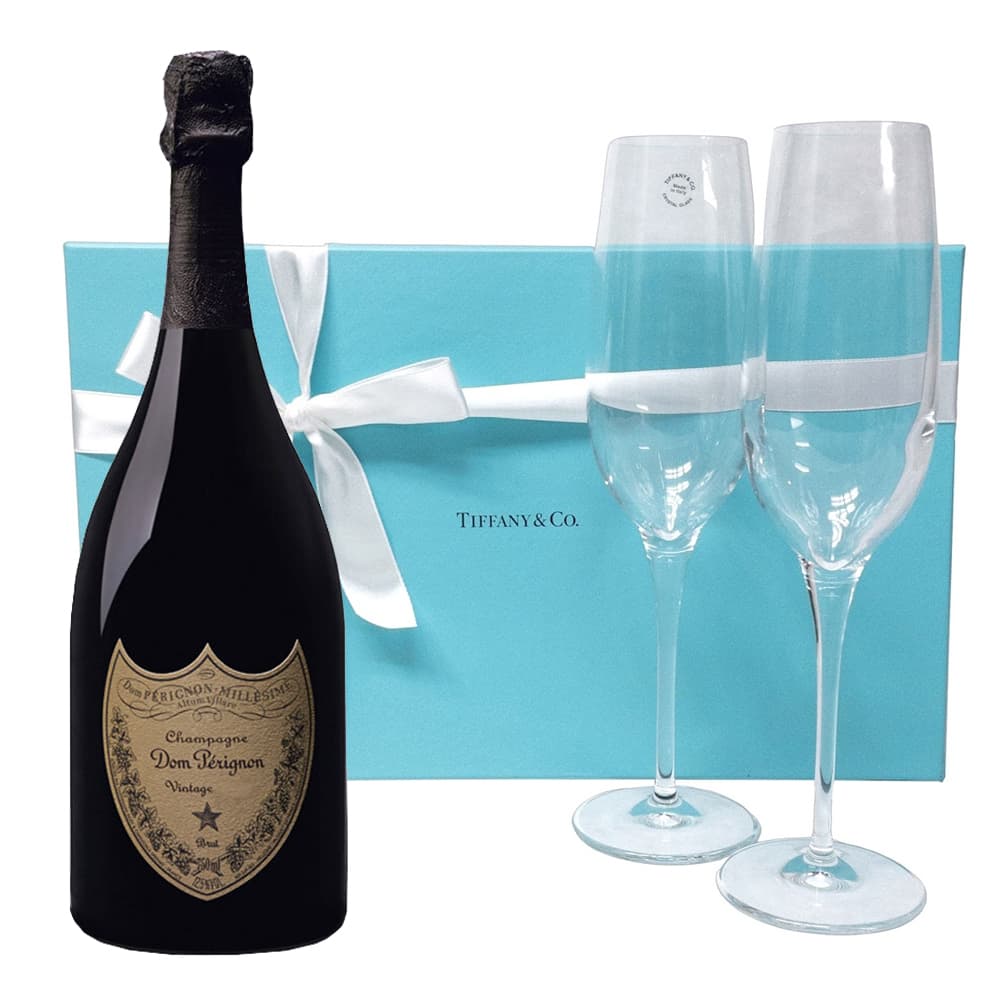
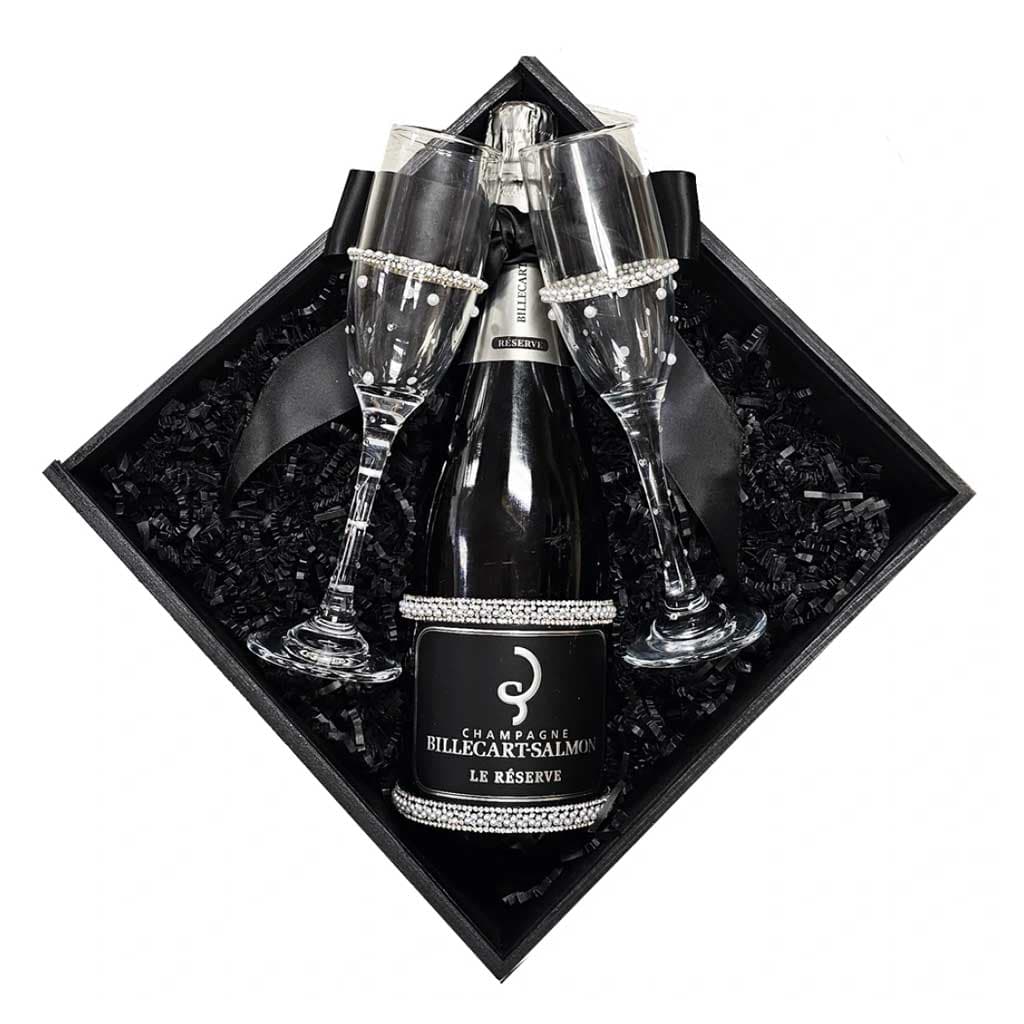
- Bejewelled Tiffany Champagne flutes for anniversaries
- Housewarmings
- Festive seasons
- Corporate gifting
A set of elegant Champagne glasses paired with a bottle of sparkling wine creates a thoughtful and complete gifting experience.
Why Do Wine Glasses Make a Perfect Gift?
Wine glasses are timeless, practical, and suitable for almost every wine lover.
They make excellent gifts for:
- Homeowners
- Dinner hosts
- Wine enthusiasts
- Professionals setting up their bar collection
Best occasions to gift wine glasses:
- Birthdays
- Housewarming celebrations
- Festivals
- Dinner parties
- Professional achievements
- Wine appreciation gifts
A premium wine glass set is a gift that continues to be used and appreciated for years.
Shop the Look: Find the Perfect Glassware for Every Occasion
Whether you are elevating your own home bar or looking for a thoughtful luxury gift, the right glassware adds elegance to every celebration. Choose Champagne flutes gift sets for festive toasts, special occasions, and personalised Champagne flute gift sets for weddings and anniversaries where celebration and sparkle take centre stage.
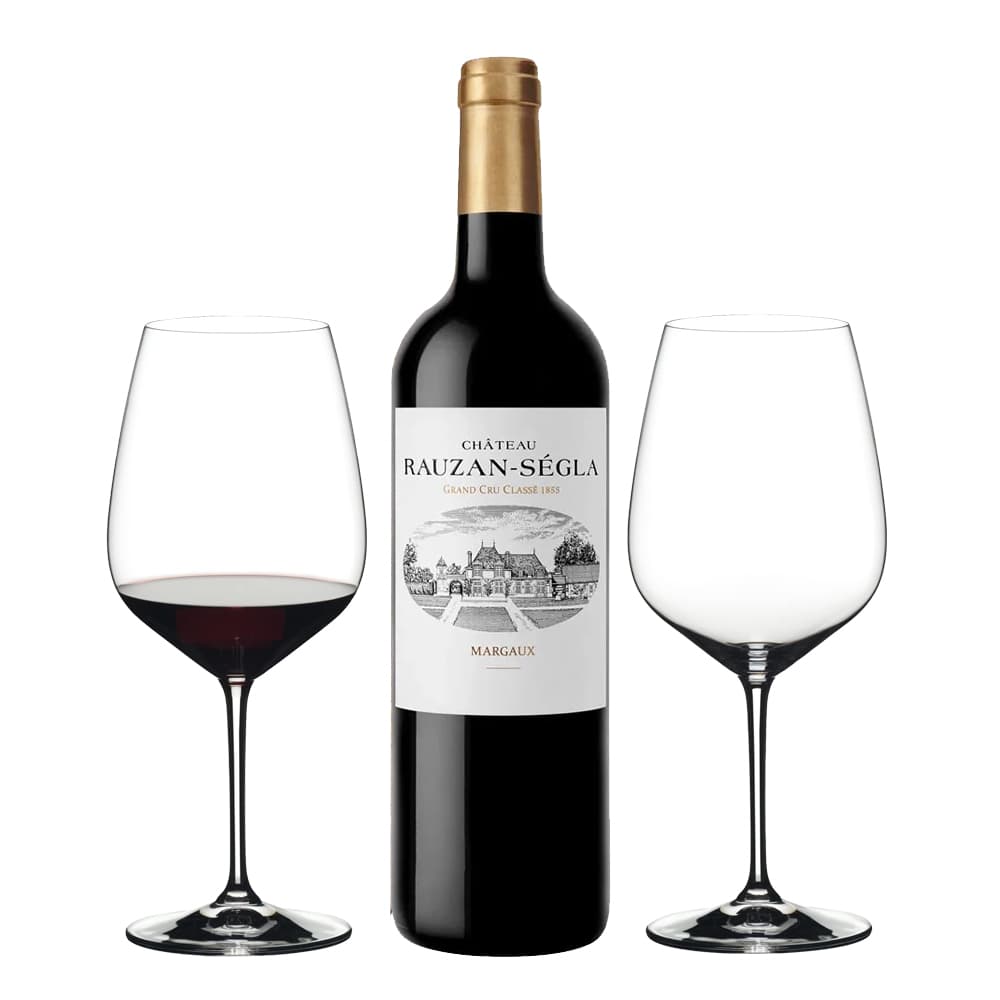
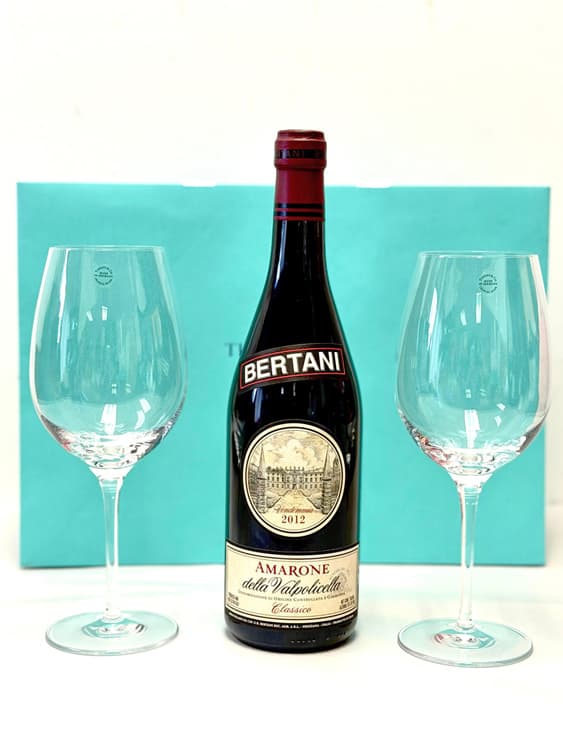
For everyday wine lovers, universal wine glasses offer versatility across red, white, rosé, and sparkling wines. Dedicated red and white wine glass set is a perfect gift for those who appreciate the nuances of different wine styles.
Premium wine glasses paired with premium wine bottles and elegant packaging create a memorable and an effortless gift for housewarmings, corporate occasions, milestones, and celebrations.
Quick Guide: Which Wine Glass Should You Gift?
| Occasion | Recommended Glass | Why |
|---|---|---|
| Wedding | Champagne Flutes | Celebrates new beginnings in style |
| Anniversary | Champagne Tulip Glasses | Elegant and romantic |
| Housewarming | Universal Wine Glasses | Practical and versatile |
| Birthday | Wine Glass Set | Personal and useful |
| Corporate Gift | Premium Glassware | Sophisticated and memorable |
| Festive Gift | Champagne Glasses | Perfect for celebrations |
| Wine Lover | Wine Glass Collection | Enhances wine enjoyment |
Save This: The Ultimate Champagne & Wine Glass Cheat Sheet
- Champagne Flute — Best for: Toasts and celebrations | Key benefit: Keeps bubbles fresh
- Champagne Tulip Glass — Best for: Premium sparkling wines | Key benefit: Balances aroma and bubbles
- Red Wine Glass — Best for: Full-bodied wines | Key benefit: Allows aromas to open
- White Wine Glass — Best for: Fresh and aromatic wines | Key benefit: Maintains freshness
- Universal Wine Glass — Best for: Everyday use | Key benefit: Works across wine styles
Final Thoughts: Champagne Glasses vs Wine Glasses
Choosing between Champagne glasses and wine glasses comes down to the experience you want to create.
Champagne glasses bring elegance, celebration, and sparkle to special occasions. Wine glasses bring versatility and help you appreciate the personality of every wine.
Whether you are buying for yourself or choosing a meaningful gift, a curated wine and glassware gift set transforms an ordinary drink into a memorable experience.
Because the perfect glass does not just hold a beverage, it holds moments, conversations, and celebrations.
Explore our curated and ready to ship collection of wine & glasses gift sets or Champagne & flute glasses gift sets to find the perfect match for every table, taste, and occasion.
Frequently Asked Questions (FAQs)
What is the difference between a Champagne flute and a Champagne glass?
A Champagne flute is a type of Champagne glass with a tall, narrow bowl designed to preserve bubbles and create an elegant presentation. However, Champagne glasses also include coupe and tulip styles, each offering a different drinking experience.
Are Champagne glasses and wine glasses the same?
No. Champagne glasses are specifically designed for sparkling wines to hold bubbles for long, while wine glasses are designed to enhance the aroma and flavour of still wines.
Can I use wine glasses for Champagne?
Yes. A tulip-shaped wine glass can actually enhance the aromas of premium Champagne. However, traditional Champagne flutes remain popular for celebrations.
Which glass is best for Champagne?
A Champagne flute is ideal for celebrations, while a tulip Champagne glass is better for appreciating aroma and complexity.
Which wine glasses are best for beginners?
Universal wine glasses are a great starting point because they work well with multiple wine styles. For a deeper look at what to buy first, read our guide to the best wine glasses for beginners.
Are Champagne glasses a good wedding gift?
Yes. Champagne glasses are one of the most popular wedding gifts because they represent celebration, togetherness, and special moments.
Why do wine glasses have stems?
The stem of a wine or champagne glass allows you to hold the glass without warming the wine with your hands. It also helps maintain the ideal serving temperature and adds aesthetic elegance to the drinking and serving experience.
How many glasses should be included in a gift set?
A set of two is ideal for couples and milestone celebrations. Larger sets work well for families and frequent entertainers.
What is the difference between a coupe and a flute?
A coupe has a wide, shallow bowl — elegant and vintage in style but not ideal for preserving bubbles, as the large surface area allows carbonation to escape quickly. A flute is tall and narrow, specifically designed to keep bubbles alive for longer and create the visual spectacle of a rising bubble stream. For special occasions where aesthetics matter most, the coupe shines. For celebrations where fizz is the priority, choose the flute.
What is the difference between a Champagne flute and a tulip glass?
Both are designed for sparkling wine, but the tulip glass has a wider bowl that narrows toward the top, allowing complex aromas to develop before they reach the nose. A flute is narrower throughout, which concentrates aromas but can suppress subtler notes in vintage or complex Champagnes. Sommeliers and Champagne houses increasingly prefer the tulip for premium bottles.
Can Champagne glasses go in the dishwasher?
It depends on the material. Standard glass Champagne flutes are generally dishwasher safe on a gentle cycle — space them out so they do not knock together. Crystal Champagne glasses, however, should always be hand-washed in warm water with a small amount of mild detergent. Dishwasher heat and harsh detergents can permanently dull the surface of crystal and reduce its brilliance over time.
Are stemless Champagne glasses a good choice?
Stemless Champagne glasses are a modern, casual option with a lower risk of being knocked over. However, because you hold the glass at the bowl rather than the stem, body heat from your hand can warm the Champagne faster, which affects the taste and bubble quality. They make a great gift for outdoor entertaining, casual gatherings, or drinkers who prefer a contemporary aesthetic over traditional form.
Why are Champagne glasses tall and narrow?
The tall, narrow shape of a Champagne flute minimises the surface area of liquid exposed to air. This slows the escape of carbon dioxide, preserving the bubbles (effervescence) for longer. The narrow opening also funnels aromas directly to the nose, concentrating the fragrance with each sip. It is form designed entirely around function — to keep your Champagne fizzy and fragrant for as long as possible.
What is the best Champagne glass for gifting?
For a safe, universally appreciated gift, Champagne flutes in a crystal gift set are always a winning choice. For a more discerning recipient who appreciates flavour, a set of tulip glasses is the sommelier-approved upgrade. If the recipient loves a vintage or glamorous aesthetic, a coupe set makes a stunning statement. Browse our curated Champagne glassware gift sets at DC Wine & Spirits for options across every style and budget.