


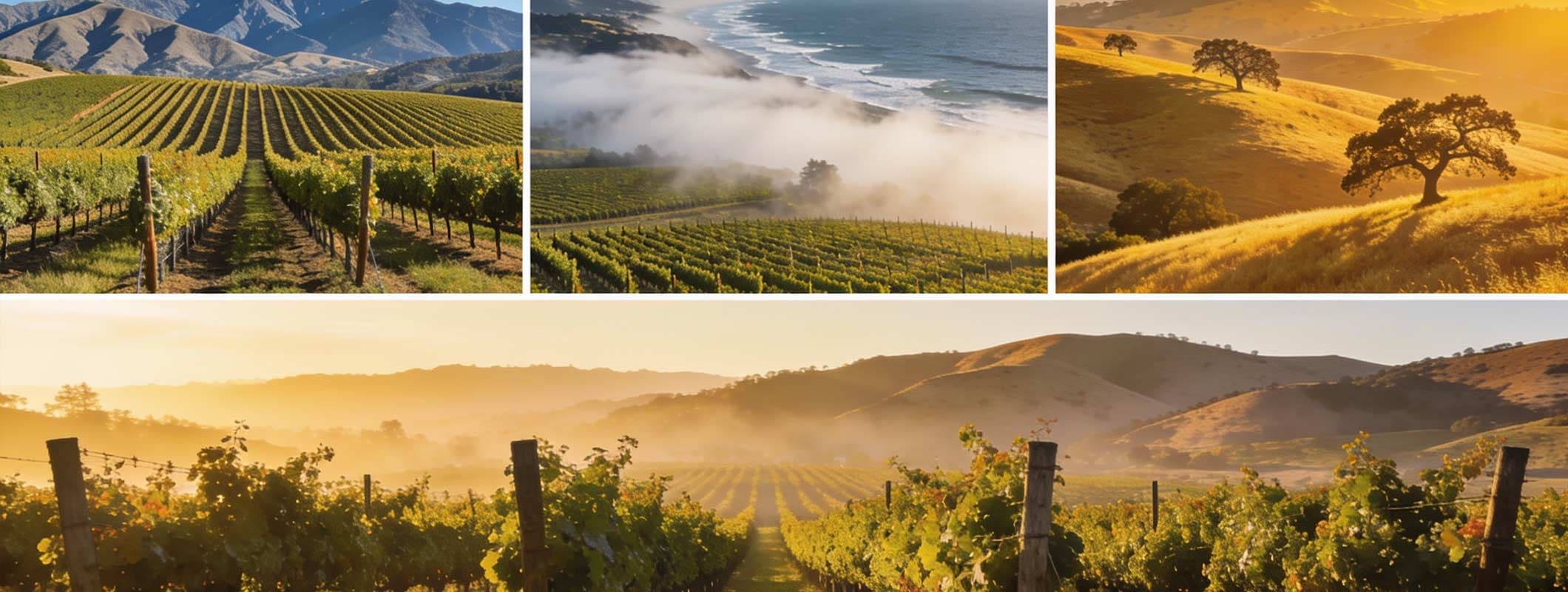
California is home to some of the world’s best-known and most diverse wine regions. But three names consistently dominate the conversation: Napa Valley, Sonoma County, and Paso Robles. These California wine regions are famous for all the right reasons - exceptional wines, stunning vineyard landscapes, and unforgettable tasting experiences. Yet each region tells a completely different story in the glass.
The choice between them comes down to what you’re looking for: the prestige and polish of Napa, the variety and authenticity of Sonoma, or the bold wines and laid-back energy of Paso Robles. This guide breaks down everything you need to know - wine styles, tasting fees, terroir, atmosphere, and the best time to visit — so you can find the right fit for your next wine trip.
At a Glance: Napa vs. Sonoma vs. Paso Robles
| Feature | Napa Valley | Sonoma County | Paso Robles |
|---|---|---|---|
| Signature Grapes | Cabernet Sauvignon, Chardonnay | Pinot Noir, Chardonnay, Zinfandel | Cabernet Sauvignon, Syrah, Rhône Blends |
| Atmosphere | Luxury and polished | Relaxed and diverse | Laid-back and adventurous |
| Number of Wineries | ~400 | 400+ | 200+ |
| Avg. Tasting Fee | $50–$150+ per person | $30–$75 per person | $20–$40 per person |
| Best For | Luxury wine travel | Variety and authenticity | Value and discovery |
| Wine Style | Powerful and structured | Elegant and diverse | Bold and expressive |
| Key AVAs | Stags Leap, Oakville, Rutherford, Howell Mountain | Russian River Valley, Dry Creek, Carneros, Alexander Valley | Adelaida District, Templeton Gap, Willow Creek District |
Napa Valley: California’s Luxury Wine Icon
Napa Valley is the first name that comes to mind when most people think about California wine. It earned global recognition after the famous 1976 Judgment of Paris, when California wines — including Napa Cabernets — beat French wines in a blind tasting that shocked the wine world. Today, Napa remains synonymous with premium Cabernet Sauvignon and high-end wine tourism, and it has never looked back.
The valley spans roughly 30 miles from north to south and contains 16 official AVAs (American Viticultural Areas), each with distinct soils and microclimates. Napa’s volcanic and alluvial soils, combined with warm days and cool nights influenced by San Pablo Bay, create the ideal conditions for deeply structured, age-worthy red wines.
What Napa Does Best
Napa is Cabernet country. The region’s flagship wines are defined by intense black fruit, structured tannins, rich oak complexity, and remarkable aging potential — bottles from great vintages can evolve for 20 years or more. While Chardonnay, Merlot, Sauvignon Blanc, and Pinot Noir are also produced, Cabernet Sauvignon dominates Napa’s identity and commands its highest prices.
Stand-out sub-regions include Oakville and Rutherford for classic, structured Cabernets, Stags Leap District for silkier and more elegant expressions, and Howell Mountain for powerful, tannic mountain-grown reds.
Whether you’re new to Napa or looking to expand your cellar, the Napa Valley wine price guide is a great way to start exploring the region’s best offerings across every budget.
The Napa Experience
Visiting Napa Valley wineries feels like stepping into the luxury tier of wine tourism. Expect architecturally spectacular properties, reservation-only tasting experiences, Michelin-starred restaurants, and world-class resort accommodation. For a curated look at standout bottles to try or gift, our guide to the best Napa wines covers everything from everyday drinking wines to cellar-worthy splurges.
The trade-off is cost and crowds. Tasting fees typically run $50–$150 per person per winery, and popular venues book up weeks in advance during peak season. Traffic on Highway 29 can be significant on summer weekends. If you’re budget-conscious or prefer a spontaneous, drop-in style visit, Napa may feel more restrictive than rewarding.
Sonoma County: Diversity Meets Authenticity
Sonoma County is Napa’s more relaxed and arguably more complex neighbor. Located directly to the west of Napa Valley and stretching all the way to the Pacific Ocean, Sonoma is physically larger, climatically more varied, and stylistically more diverse than any single-region label can capture.
Where Napa built its reputation on one grape variety, Sonoma’s strength is breadth. The county contains 18 AVAs that range from cool, fog-drenched coastal zones to warmer inland valleys, allowing growers to produce an extraordinary range of grape varieties — from Pinot Noir and Chardonnay along the coast to Zinfandel and Cabernet Sauvignon inland.
What Sonoma Does Best
Sonoma’s proximity to the Pacific Ocean is its defining advantage. The Russian River Valley, in particular, is one of California’s finest sources for Pinot Noir and Chardonnay, with cold marine fog pushing inland each morning and burning off by afternoon to create a long, even growing season. The result is wines of striking elegance, aromatic intensity, and precise acidity.
Dry Creek Valley is the home of California’s best Zinfandel — rich, spicy, and full-bodied without losing freshness. Alexander Valley produces world-class Cabernet Sauvignon with a softer, more approachable character than Napa. Carneros, which straddles both Sonoma and Napa, is known for its silky Pinot Noir and bright sparkling wines.
This diversity is Sonoma’s calling card. If you’re hunting for the perfect summer wine — something fresh, elegant, and food-friendly — Sonoma’s coastal Chardonnays and Pinot Noirs are hard to beat.
The Sonoma Experience
Sonoma wine country feels less commercial and more agricultural. You’ll find family-owned wineries, small tasting rooms, and farm-to-table restaurants where the produce is grown next door. Tasting fees are more moderate ($30–$75 per person), walk-in appointments are more common, and the overall pace is slower and more genuine.
Many wine lovers describe Sonoma as offering a more intimate connection to the land and the people who farm it — a meaningful contrast to Napa’s luxury-resort approach. The one practical challenge: Sonoma’s large geographic footprint means more driving between wineries. Plan your sub-regions in advance to make the most of a visit.
Paso Robles: California’s Rising Star
Over the past two decades, Paso Robles has transformed from an under-the-radar region into one of California’s most exciting wine destinations. Located on the Central Coast roughly midway between Los Angeles and San Francisco — about a three-hour drive from either city — Paso has built a reputation for bold reds, Rhône-inspired blends, and exceptional value that routinely surprises first-time visitors.
In 2013, Wine Enthusiast named Paso Robles its Wine Region of the Year — the first American region ever to earn that distinction. The recognition was overdue. Paso’s 11 AVAs span limestone-rich hillsides, ancient seabeds, and fractured shale, producing a patchwork of terroirs that supports more than 60 grape varieties.
What Paso Does Best?
Two things set Paso Robles apart from every other California wine region: its soils and its temperature swings. Much of the west side sits on calcareous limestone — the same rare soil found in Burgundy, Champagne, and the southern Rhône — which drives mineral complexity and natural acidity in the wines. Combined with the region’s dramatic diurnal shift (day-to-night temperature swings of up to 40°F, the largest in U.S. wine country), Paso produces wines that balance ripeness and freshness in a way that is difficult to achieve in warmer, more uniform climates.
Paso thrives with Cabernet Sauvignon, Syrah, Grenache, and Mourvèdre for powerful Rhône-style blends, alongside innovative proprietary blends and a growing wave of Italian and Spanish varietals. Many bottles earning 90+ point scores retail for $25–$50, delivering quality that is difficult to match at the same price point in Napa or Sonoma.
The Paso Robles Experience
Paso Robles operates without a dress code or a velvet rope. Tasting fees run $20–$40 per person on average — and many smaller producers waive fees entirely when you purchase a bottle. Walk-in visits are the norm, not the exception. At many tasting rooms, the person pouring your flight is the winemaker who grew the grapes.
The region is famously dog-friendly and family-friendly, with bocce courts, lawn games, and outdoor picnic areas at many estates. The downtown plaza is walkable and lined with restaurants, tasting rooms, and boutiques. Hearst Castle is just 30 minutes west, with Big Sur and the Pacific coast within easy reach — making Paso an ideal base for a broader Central Coast trip.
Wine Style Comparison: Napa vs. Sonoma vs. Paso Robles
Understanding each region’s wine identity makes it easier to choose based on what you actually enjoy drinking.
Choose Napa If You Love:
- Cabernet Sauvignon with powerful structure, dark fruit, and long aging potential
- Bordeaux-style blends (Merlot, Cabernet Franc, Petit Verdot) with weight and complexity
- Rich, full-bodied Chardonnay with oak influence and creamy texture
- Cellar-worthy bottles built to evolve over 10–20+ years
Choose Sonoma If You Love:
- Elegant, aromatic Pinot Noir from cool-climate coastal vineyards
- Crisp, mineral-driven Chardonnay with fresh acidity and restraint
- Spicy, full-flavored Zinfandel with Old Vine character
- Variety — from sparkling wines to Sauvignon Blanc to Cabernet, all in one county
Choose Paso Robles If You Love:
- Rhône-style blends: Syrah, Grenache, Mourvèdre — bold, spicy, and layered
- Expressive, fruit-forward reds with mineral depth and genuine complexity
- Outstanding quality at $25–$60 — without the premium pricing of Napa
- Discovering boutique producers before the rest of the wine world does
Napa Valley vs. Sonoma Which Is Better for You?
Napa Valley and Sonoma County are neighbors separated by the Mayacamas Mountains, but they offer very different wine experiences. The individual sections above cover each region in depth; this is the direct head-to-head for anyone choosing between the two.
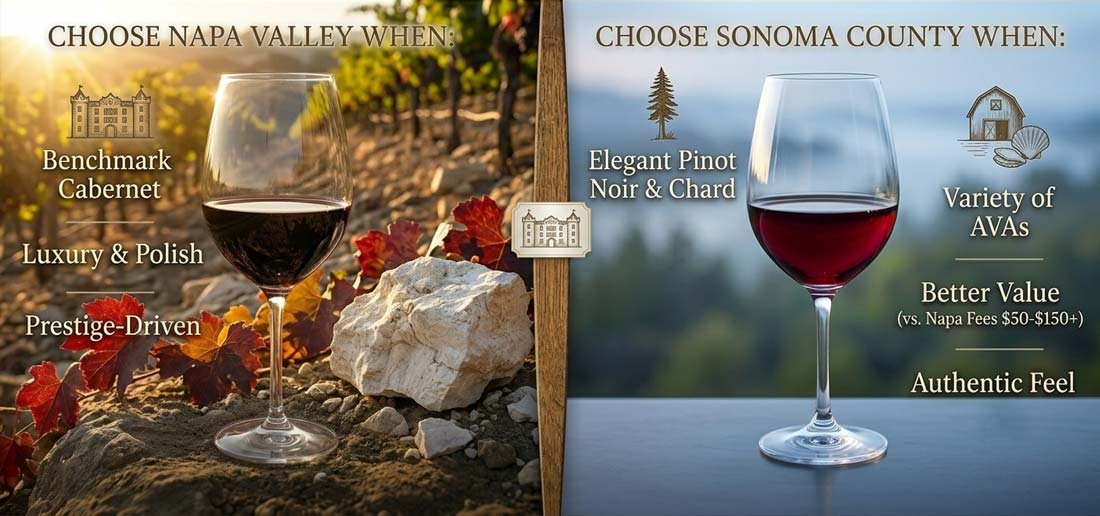
Choose Napa Valley When:
You want Cabernet Sauvignon as the star of the trip. Napa is the undisputed benchmark for California Cab structured, age-worthy, and prestige-driven in a way Sonoma simply does not attempt to replicate. If you are buying a bottle as a serious gift, celebrating a milestone, or adding to a cellar, Napa Cabernet is the answer.
Luxury and polish matter to you. Napa's tasting rooms are architecturally spectacular, the restaurants are Michelin-level, and the overall production is world-class. If you want the definitive "California wine country" experience that matches the postcard image, Napa delivers it.
Choose Sonoma County When:
You want Pinot Noir or Chardonnay at their California best. The Russian River Valley produces some of the most elegant, precise Pinot Noir in the New World wines that trade on subtlety and finesse rather than weight. Sonoma Chardonnay from coastal sub-regions is crisp and mineral-driven in a way Napa Chardonnay typically is not.
You prefer variety over a single statement. Sonoma County contains 18 AVAs spanning coastal cool-climate zones to warmer inland valleys, and it has more grape varieties at a high level than any single region in California. If you enjoy exploring rather than focusing, Sonoma rewards that instinct. Budget is a consideration without wanting to sacrifice quality. Sonoma tasting fees run $30–$75 versus Napa's $50–$150+, and bottle prices are meaningfully lower across the board for comparable quality levels.
The Verdict
For premium California Cabernet Sauvignon and iconic wine tourism, Napa wins. For Pinot Noir, Chardonnay, variety, and better value, Sonoma wins. Many wine travelers visit Napa first, return to Sonoma, and find they prefer it not because the wines are better, but because the experience feels more authentic.
Paso Robles vs. Napa Valley The Cabernet Question
Paso Robles and Napa Valley share the same flagship grape Cabernet Sauvignon which makes this comparison particularly interesting. Both regions are serious about Cab, both earn high scores from critics, and both attract dedicated wine collectors. But the similarities largely end there.
Wine Style: Similar Grape, Different Expression
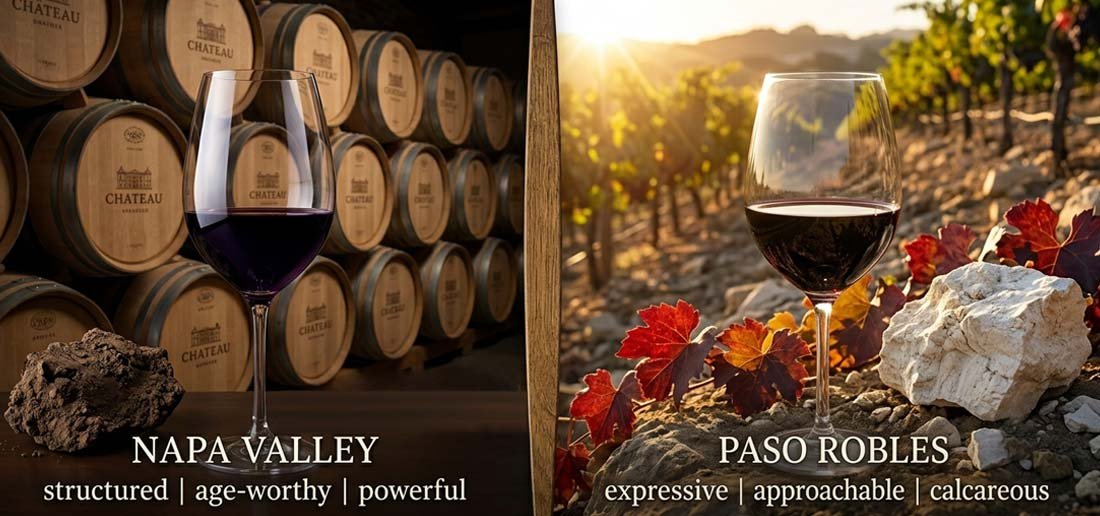
Napa Cabernet is defined by structure: dense tannins, dark fruit, significant oak influence, and a long aging curve. These are wines built for cellars and formal occasions powerful and deliberate in style.
Paso Robles Cabernet is built on different foundations. The region's calcareous soils and extreme day-to-night temperature swings (up to 40°F, the largest diurnal shift in U.S. wine country) produce Cabernets that balance ripe fruit with natural acidity and mineral depth. The result is bold and expressive but often more immediately approachable than a comparable Napa bottling.
Price and Value
This is where the comparison becomes most striking. In Napa, a quality Cabernet Sauvignon typically starts around $60 and climbs to $300+ for iconic producers. In Paso Robles, wines earning 90+ point scores routinely retail for $25–$80. For someone who wants a serious, complex California Cabernet without Napa pricing, Paso Robles is the most logical answer in the state.
The Verdict
Choose Napa Cabernet for prestige, age-ability, and iconic producer names that carry recognition value as gifts or cellar investments. Choose Paso Robles Cabernet for excellent quality at honest prices, combined with a winemaking scene that prioritizes discovery over branding. Both are worth drinking; they simply serve different occasions.
Paso Robles vs. Sonoma Two Alternatives, Two Very Different Wines
Paso Robles and Sonoma County are frequently mentioned as alternatives to Napa Valley, but they offer almost opposite wine experiences. Understanding the distinction between them makes it easier to choose the right bottle or the right destination.
Wine Style
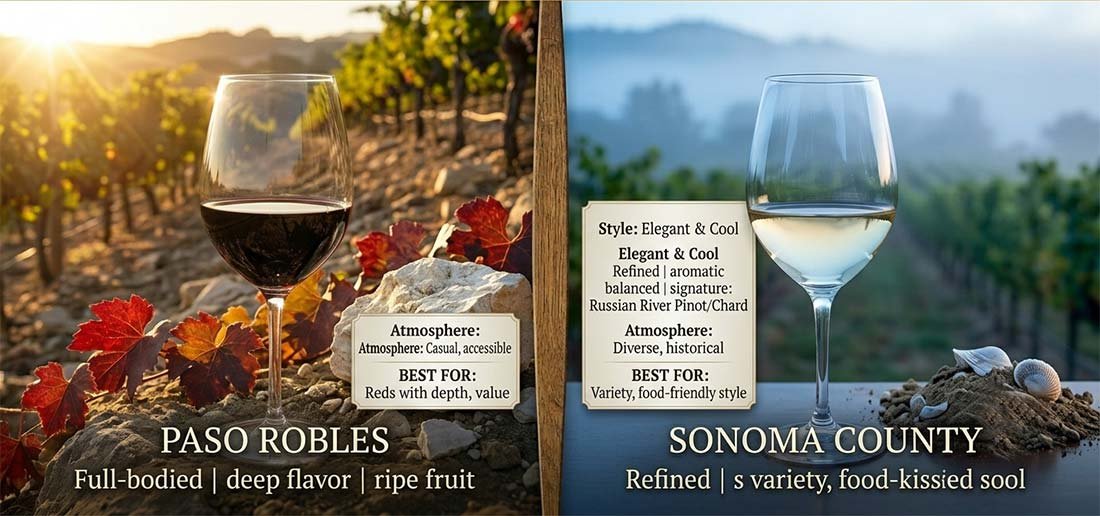
Paso Robles leans bold and warm. The region's signature wines Cabernet Sauvignon, Syrah, Grenache, Mourvèdre, and Rhône-style blends are full-bodied, deeply flavored, and built for people who enjoy wine with presence and character. The warm inland climate produces wines with ripe fruit, earthy spice, and natural richness.
Sonoma County is elegant and cool. Its best wines Russian River Valley Pinot Noir and Chardonnay, Dry Creek Zinfandel, Alexander Valley Cabernet are defined by refinement, aromatic precision, and balance. The coastal influence of the Pacific keeps temperatures moderate and acidity lively, producing wines that feel more restrained and food-friendly.
Choosing Between Them
Choose Paso Robles if your preference runs toward red wines with depth and intensity, especially Rhône varieties (Syrah, Grenache, Mourvèdre) or bold Cabernet at value pricing. Paso also wins on accessibility walk-in tastings, lower fees, and a casual atmosphere that suits spontaneous exploring.
Choose Sonoma County if you love Pinot Noir, coastal Chardonnay, or enjoy tasting across a wide range of grape varieties in a single trip. Sonoma's sub-regions are so different from each other that a multi-day visit can feel like exploring several wine countries at once.
The Verdict
Paso Robles and Sonoma don't actually compete for the same wine lover. Paso is the right answer for bold red wine enthusiasts who want quality without premium pricing. Sonoma is the right answer for those who want elegance, variety, and a genuine connection to California's cool-climate winemaking tradition. If you enjoy both styles, plan two separate trips. They're worth it.
Tasting Fees & Budget Comparison
Cost is one of the most practical factors in choosing a wine region, and the gap between Napa and its alternatives is significant.
| Napa Valley | Sonoma County | Paso Robles | |
|---|---|---|---|
| Avg. Tasting Fee | $50–$150+ | $30–$75 | $20–$40 |
| Walk-in Availability | Limited — reservations often required | Moderate — mix of both | Widely available |
| Wine Price Range | $40–$300+ per bottle | $25–$150 per bottle | $18–$80 per bottle |
| Lodging | High — luxury resorts dominate | Mid-range with boutique options | Affordable — B&Bs, vineyard stays, inns |
Many Paso Robles producers also offer free tastings when you join a wine club or purchase a case, making it possible to spend a full day tasting exceptional wines for very little out of pocket.
Best Time to Visit Each Region
Napa Valley
Napa is a year-round destination but peaks in autumn. September and October bring the harvest season, with crush activities, barrel tastings, and a buzzing energy that wine lovers plan months around. Summer is popular but hot and crowded. Spring (March–May) offers mild weather, fewer tourists, and the vines in full bloom. Winter is quieter and more intimate — many wineries offer discounted tastings and fireside pours.
Sonoma County
Sonoma’s best window runs from late spring through early fall, when the coastal sub-regions are at their most scenic and the inland valleys are warm but not oppressive. The Russian River Valley is particularly beautiful in summer when the morning fog creates a cool, cinematic atmosphere. Harvest (September–October) is the region’s busiest and most festive time.
Paso Robles
September and October are the sweet spot — harvest excitement, warm afternoons, and cool evenings without the intense summer heat. Summer high temperatures in Paso can exceed 100°F, so plan morning and late-afternoon tastings if you visit in July or August. Spring brings wildflowers and mild conditions ideal for outdoor exploring. Winter is Paso’s hidden gem: fewer crowds, cozy tasting rooms, and winemakers who have more time to talk.
Which California Wine Region Is Best for First-Time Visitors?
The honest answer is: it depends on what you want from the trip.
Choose Napa if your goal is iconic, bucket-list wineries, world-class dining, and a luxurious, polished experience. Come with a reservation, a generous budget, and a willingness to be wowed. If Napa is more your style, explore our Napa Valley wine gifts collection — from everyday bottles to special occasion splurges.
Choose Sonoma if you want the greatest variety of wines and landscapes in a single trip, prefer a more relaxed and local atmosphere, and enjoy exploring Sonoma wines without a rigid itinerary.
Choose Paso Robles if you want exceptional wines without Napa-level prices, love a laid-back small-town vibe, and want the freedom to walk into tasting rooms without reservations. Ready to explore? Browse our Paso Robles wine collection to discover standout bottles from the region’s top producers, shipped straight to your door.
Many experienced wine travelers eventually visit all three — and discover that Paso delivers the best value, Sonoma offers the most diversity, and Napa sets the benchmark for sheer luxury.
Napa vs. Sonoma vs. Paso Robles: Strengths & Considerations
| Region | Strengths | Considerations |
|---|---|---|
| Napa Valley | World-famous Cabernet Sauvignon; landmark wineries and luxury resorts; Michelin-starred dining; easy-to-navigate wine trail; iconic wine tourism prestige | Highest tasting fees in California; reservations often required weeks in advance; can feel commercial during peak season; significant traffic on Highway 29 |
| Sonoma County | Exceptional diversity of grapes and wine styles; strong Pinot Noir and Chardonnay; relaxed atmosphere; beautiful coastal and inland landscapes; better value than Napa | Large geographic area requires planning; wineries spread across multiple sub-regions; less straightforward for first-time visitors without a clear itinerary |
| Paso Robles | Outstanding value for money; exciting Rhône blends and bold reds; welcoming, unpretentious tasting culture; fewer crowds; innovative winemaking; dog- and family-friendly | Less internationally recognized than Napa; fewer luxury hotel options; summer heat can be intense; requires more travel planning for visitors flying into California |
Final Thoughts
Choosing between Napa Valley, Sonoma County, and Paso Robles is not a question of which region is best — it’s about matching the right destination to what you’re looking for.
- Napa Valley is California’s luxury wine capital: polished, prestigious, and worth every penny if that’s the experience you’re after.
- Sonoma County is California’s diverse wine arena: endlessly explorable, authentic, and full of surprises.
- Paso Robles is California’s most exciting rising destination: bold, welcoming, and delivering world-class wine without the world-class price tag.
For true wine lovers and California loyalists, the answer is simple: visit all three. Each region narrates a different chapter of California’s wine story, and together they offer one of the most compelling wine travel experiences in the world.
Frequently Asked Questions
Is Paso Robles as good as Napa Valley?
In terms of wine quality, yes — increasingly so. Paso Robles regularly produces wines that earn 90–100-point scores and rival Napa in blind tastings, often at a fraction of the price. The experience is different: less formal, more personal, and more focused on discovery than prestige.
Can you visit Napa, Sonoma, and Paso Robles in one trip?
It’s possible but not easy. Napa and Sonoma are about an hour apart and pair well on a longer trip. Paso Robles is roughly 4 hours south of Sonoma, so combining all three requires at least 5–7 days and some planning. A popular approach is to dedicate a separate weekend trip to Paso as its own destination.
Which region is best for couples?
All three work well for couples, but Napa is the classic romantic choice with its luxury hotels, fine dining, and polished tasting rooms. Sonoma offers beautiful scenery and a more intimate, local feel. Paso Robles suits adventurous couples who want to explore without a packed itinerary.
Is Sonoma cheaper than Napa?
Yes, significantly. Average tasting fees in Sonoma run $30–$75 per person compared to Napa’s $50–$150+. Accommodation is also more affordable, and many Sonoma wines offer excellent quality at lower price points than their Napa equivalents.
What food is Paso Robles known for?
Paso Robles has a thriving farm-to-table dining scene, with several restaurants recognized by the Michelin Guide. The region is also known for locally grown olives and olive oils, artisan cheese, and a strong culture of pairing food with wine. Many wineries have their own restaurants or picnic-friendly grounds.
Is Napa or Sonoma better for someone who wants a premium California Cabernet?
Napa Valley, without question. Its Cabernets, especially from Oakville, Rutherford, and Stags Leap District, are structured, deeply concentrated, and built to age 15–20+ years. Sonoma produces good Cabernet too, particularly from Alexander Valley, but when it comes to a premium gift or special occasion bottle, Napa is the benchmark Sonoma is measured against.
Is Napa Valley or Sonoma wine better for someone who wants a classic California experience?
Both, but differently. Napa is the postcard version of iconic wineries, luxury resorts, Michelin-starred restaurants, and world-class Cabernet. The 1976 Judgment of Paris cemented its global status. Sonoma is the quieter, more authentic California family wineries, farm-to-table dining, redwood forests, and Pacific coastline. First-timers go to Napa; those who go deeper often fall for Sonoma.
What Napa wines do critics recommend for someone who wants to splurge on a California icon?
These names come up most consistently: Opus One ($479–$499) for the ultimate Bordeaux-style blend; Caymus Special Selection ($200–$245) for rich, opulent Cabernet produced only in the best vintages; Stag's Leap CASK 23 ($250–$300) carrying the legacy of the winery that won the 1976 Judgment of Paris; Far Niente ($100–$140) from Oakville for elegant, age-worthy gifting; and Silver Oak ($150–$180) for its distinctive vanilla-and-cassis American oak profile. For the ultimate splurge, Screaming Eagle ($3,000+) and BOND ($400–$600) represent Napa's ultra-premium tier.